
TikTok ads objectives are the foundation of every successful campaign on the platform. When advertisers launch campaigns in TikTok Ads Manager, selecting the right objective determines how the algorithm delivers ads, which users see them, and what actions the system tries to optimize. For performance marketers and media buyers, this decision directly impacts campaign efficiency, cost per result, and long-term scalability.
TikTok structures advertising objectives around different stages of the marketing funnel, allowing brands to run campaigns for awareness, engagement, or conversions. Understanding how each objective works helps advertisers align campaign goals with measurable outcomes. This guide explains how TikTok ads objectives work, what options are available, and how to select the best objective for your campaign strategy.
What Are TikTok Advertising Objectives?
The TikTok advertising objective is the specific action you want people to take when they see your ads. By selecting an objective, you are essentially "programming" the TikTok algorithm. The platform uses historical data and user patterns to find the individuals within your target audience who are most likely to perform your desired action, whether that is simply viewing a video or completing a high-value purchase.
Why Advertising Objectives Matter in TikTok Ads
For seasoned advertisers, it’s tempting to think that "good creative solves everything." While creativity is king on TikTok, the objective is the compass.
-
Algorithm Optimization: TikTok optimizes delivery based on your choice. If you choose "Traffic" but really want sales, TikTok will find "clickers" rather than "buyers," leading to high CTR but zero conversions.
-
Budget Efficiency: Each objective has a different billing event (CPM, CPC, or CPV). Choosing the wrong one can lead to overpaying for impressions that don't move the needle.
-
Data Maturation: Selecting the right objective helps the TikTok Pixel (or Events API) gather the correct data signals, shortening the "Learning Phase" for your ad sets.
The Three Categories of TikTok Advertising Objectives
TikTok organizes its objectives into three stages that mirror the traditional marketing funnel: Awareness, Consideration, and Conversion.
Awareness Objectives
Awareness campaigns are designed to maximize reach and expose a brand or message to as many relevant users as possible. These campaigns are typically used at the top of the marketing funnel.
The primary goal is not immediate conversion but brand visibility, product discovery, and audience exposure.
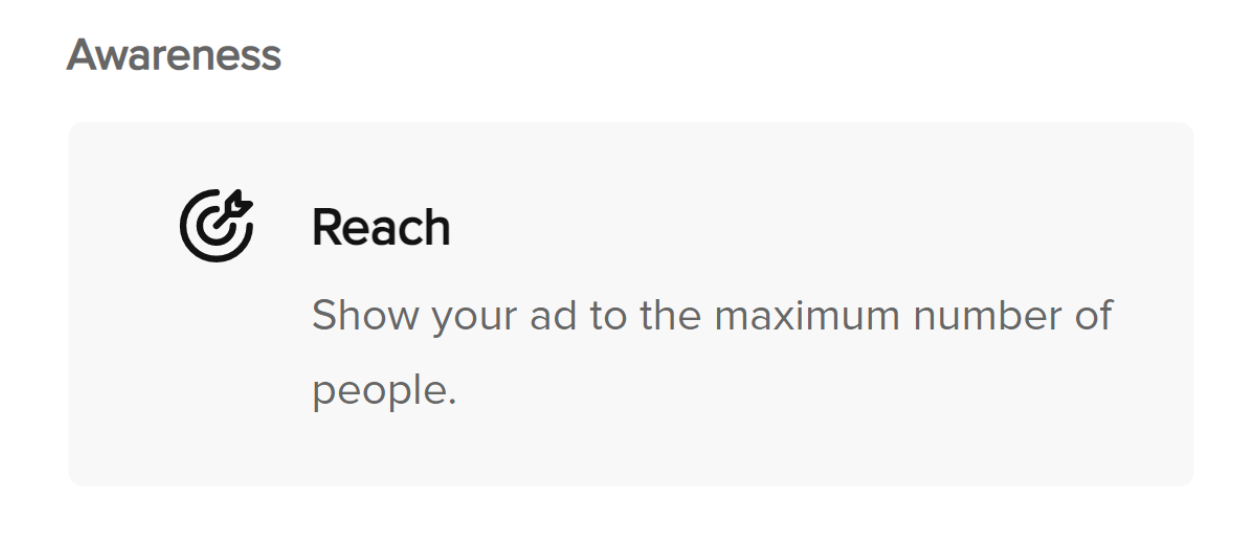
Types of Awareness Objectives
-
Reach
The reach objective focuses on showing ads to the maximum number of unique users within the defined target audience. TikTok’s delivery system prioritizes broad exposure rather than engagement or conversions.
This objective is commonly used for:
-
product launches
-
brand announcements
-
new market entry
-
large-scale awareness campaigns
Consideration Objectives
Consideration objectives target users who are likely to interact with content or explore a brand further. These campaigns aim to generate engagement signals that move users deeper into the marketing funnel.
Advertisers often use consideration campaigns to build interest and qualify potential customers before running conversion-focused campaigns.
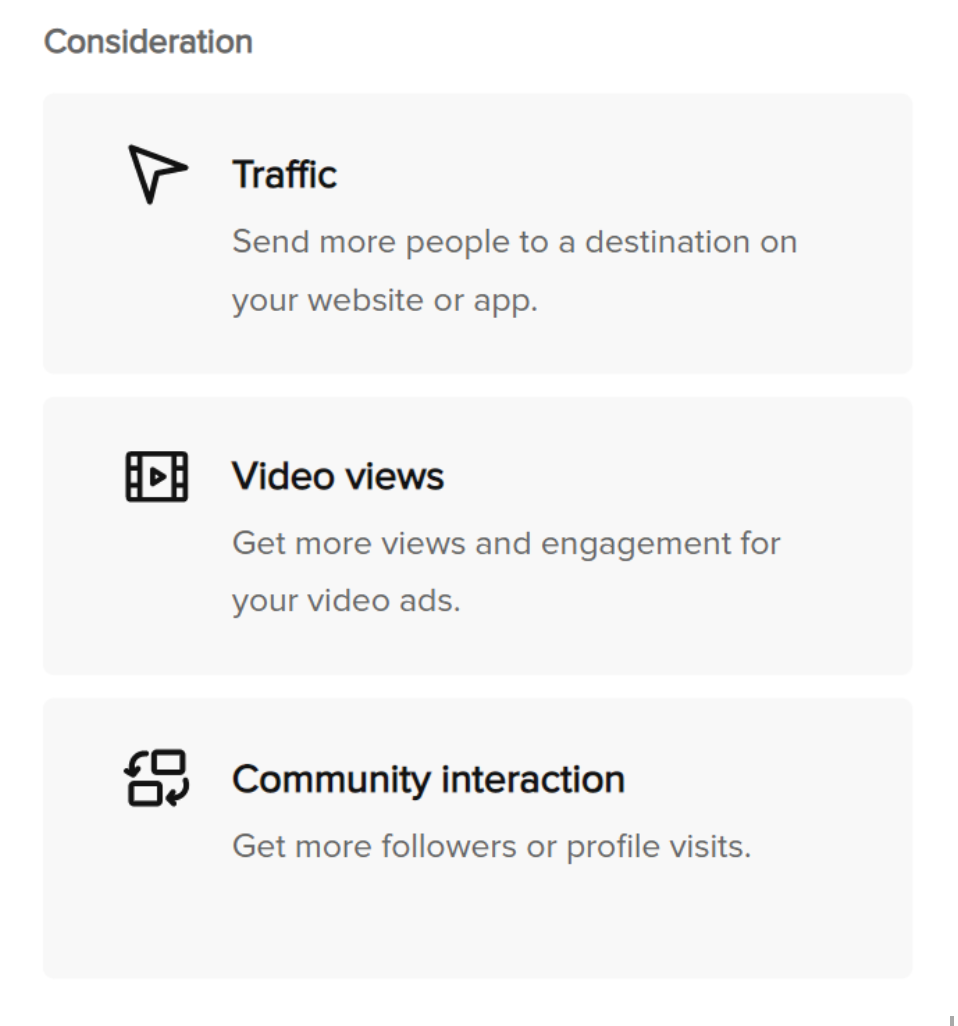
Types of Consideration Objectives
-
Traffic: designed to drive users to external destinations such as landing pages, product pages, or websites.
Traffic campaigns are commonly used for:
-
content promotion
-
blog traffic
-
product discovery
-
landing page testing
However, traffic alone does not guarantee conversions. Many advertisers use traffic campaigns earlier in the funnel before optimizing for sales.
-
Video Views: Optimizes for users most likely to watch 2-second or 6-second views of your content. This is excellent for building "Warm Audiences" for retargeting.
Video view campaigns are particularly effective when advertisers want to:
-
build brand familiarity
-
educate audiences about products
-
increase watch time on creative assets
Community Interaction: Designed to gain more followers or drive traffic to your profile page.
This objective is useful for:
-
growing brand communities
-
increasing engagement signals
-
building social proof
Conversion Objectives
Conversion objectives focus on bottom-of-funnel outcomes such as purchases or high-value actions. These campaigns prioritize users who are most likely to complete measurable events.
Conversion campaigns generally require reliable tracking signals to optimize effectively.
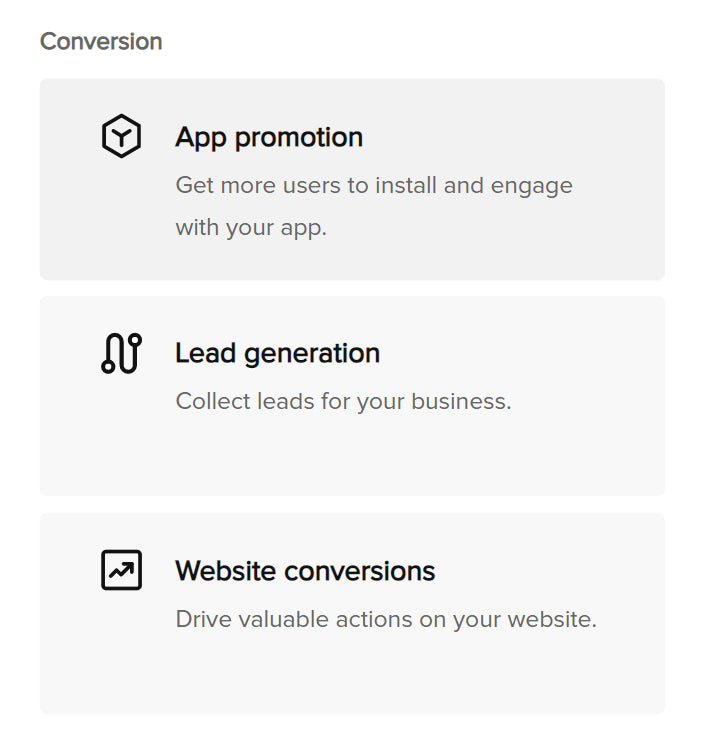
Types of Conversion Objectives
Sales: Sales campaigns are designed to drive purchases or revenue-generating actions. The system prioritizes users who demonstrate buying behavior.
These campaigns are commonly used for:
-
ecommerce stores
-
product launches
-
promotional campaigns
-
direct response advertising
Lead Generation: Uses an instant form within TikTok to capture user data (emails, phone numbers) without them leaving the app.
These campaigns are frequently used for:
-
service inquiries
-
webinar registrations
-
newsletter signups
-
B2B lead acquisition
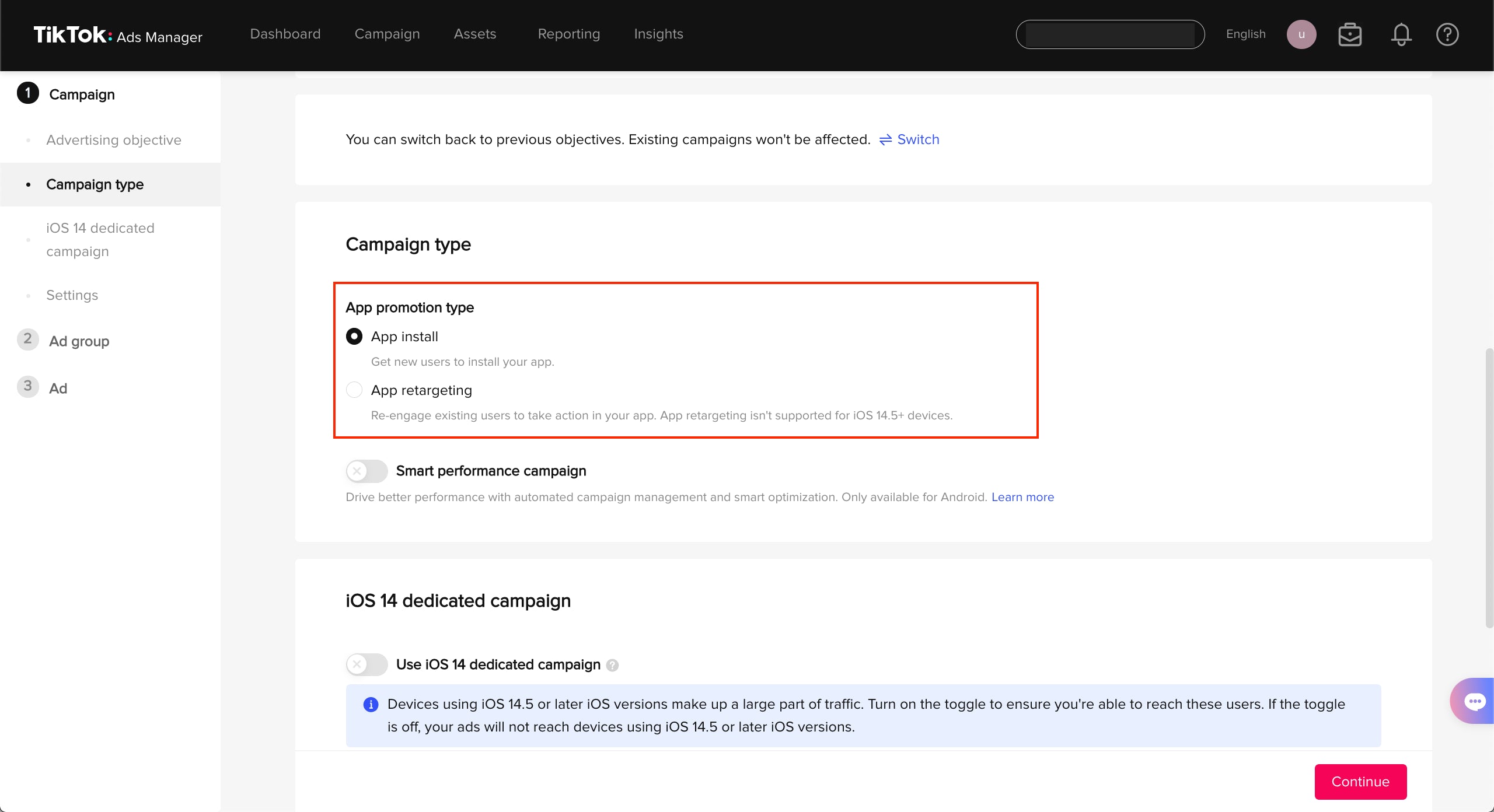
App Promotion: Specifically for driving app installs or high-value events within a mobile app.
Advertisers running app promotion campaigns typically optimize for:
-
installs
-
app registrations
-
in-app events
These campaigns rely heavily on app tracking data to identify users who are more likely to install and engage with the application.
Website Conversions
Website conversion campaigns optimize for specific actions tracked on a website, such as:
-
add-to-cart events
-
signups
-
purchases
-
other custom conversion events
How to Choose the Right TikTok Advertising Objective
Selecting the correct campaign objective is one of the most important decisions advertisers make when launching campaigns. The best objective depends on campaign goals, funnel stage, and available data.
Choose Based on Marketing Funnel Stage
Each objective aligns with a different stage of the customer journey.
Top-of-funnel campaigns typically focus on awareness and exposure. Middle-funnel campaigns focus on engagement and traffic, while bottom-of-funnel campaigns aim for measurable conversions.
For example:
-
awareness stage → reach
-
consideration stage → traffic or video views
-
conversion stage → sales or website conversions
Using the correct objective for each stage ensures the algorithm optimizes for the right behavior.
Choose Based on Business Goals
Campaign objectives should reflect real business outcomes rather than vanity metrics.
Examples include:
-
brands launching new products may prioritize reach
-
content-driven campaigns may prioritize video views
-
ecommerce businesses may prioritize sales
-
service businesses may prioritize lead generation
When the objective aligns with the final business goal, campaign performance becomes easier to measure and optimize.
Choose Based on Budget and Data
Conversion campaigns generally require more data to optimize effectively. If a campaign lacks sufficient events, the algorithm may struggle to learn.
Advertisers with limited budgets or low event volume may start with consideration campaigns such as traffic or video views to generate engagement signals.
Once enough data accumulates, campaigns can gradually transition toward conversion-focused objectives.
Best TikTok Ad Formats for Each Advertising Objective
Different ad formats perform better depending on campaign objectives. Matching formats with the right objective can improve both engagement and performance.
For example:
|
Objective |
Recommended Format |
|
Awareness |
TopView Ads or Spark Ads (using viral organic content). |
|
Consideration |
In-Feed Ads with clear CTAs (Learn More, Shop Now). |
|
Lead Gen |
In-Feed Ads with Instant Forms. |
|
Conversion |
Video Shopping Ads or Spark Ads with a heavy "Product-First" focus. |
If you want to explore how specific ad formats work in detail, reviewing TikTok’s advertising format options can help you select the most effective format for your campaign goals.
Common Mistakes When Choosing TikTok Advertising Objectives
Even experienced advertisers sometimes select campaign objectives that do not align with their strategy. These mistakes can reduce efficiency and increase acquisition costs.
Below are several common issues that affect campaign performance.
Optimizing for traffic when the goal is sales
Traffic campaigns may generate large volumes of clicks but do not necessarily drive purchases. Conversion-focused campaigns are better suited for revenue goals.
Running conversion campaigns without sufficient data
Conversion optimization requires consistent event signals. Without enough data, campaigns may struggle to exit the learning phase.
Ignoring the marketing funnel
Running only conversion campaigns without building awareness or engagement often limits scale and increases costs.
Using the same objective for every campaign
Different stages of the customer journey require different objectives. A single objective rarely supports the entire funnel.
Misaligned creatives and objectives
Creative messaging must match campaign goals. For example, educational content may perform well in consideration campaigns but poorly in direct-response conversion campaigns.
FAQs
Can I change the objective of an existing ad campaign?
No. Once a campaign is created, the objective is locked. You must create a new campaign to select a different objective.
Which objective is best for a small budget?
If you have a limited budget, "Video Views" or "Traffic" are often best to gather initial data without the high CPMs associated with "Sales" objectives.
Which TikTok ad objective is best for ecommerce?
For ecommerce businesses, conversion-focused objectives such as sales or website conversions are typically the most effective because they optimize for purchasing behavior.
Can advertisers change the campaign objective after launching a campaign?
Campaign objectives generally cannot be changed after a campaign is created. Advertisers usually need to create a new campaign if they want to optimize for a different objective.
Should new advertisers start with conversion campaigns?
Not always. Many campaigns perform better when they first build engagement and traffic before optimizing for conversions, especially when data signals are limited.