
TikTok ads geo-targeting allows advertisers to deliver ads to users based on their geographic location. Instead of showing campaigns to a broad global audience, brands can focus on specific countries, regions, cities, or even ZIP code areas where potential customers are most likely to convert.
For performance marketers, location targeting plays a major role in campaign efficiency. Different regions often have different purchasing power, cultural trends, and advertising competition levels. By adjusting targeting based on location, advertisers can improve ad relevance, control budget allocation, and scale campaigns more strategically
This guide explains how TikTok geo targeting works, explores the available targeting levels, from broad countries to specific ZIP codes, and outlines best practices to help you run location-based campaigns successfully.
What Is TikTok Ads Geo Targeting?
TikTok ads geo-targeting is a targeting method that allows advertisers to display ads to users within specific geographic areas, such as countries, states, cities, or postal code regions.
Instead of distributing ads across the entire platform audience, advertisers can restrict campaign delivery to the locations that are most relevant to their business goals. This targeting capability is particularly useful for brands running regional promotions, location-based services, or market expansion campaigns.
How TikTok Determines User Location
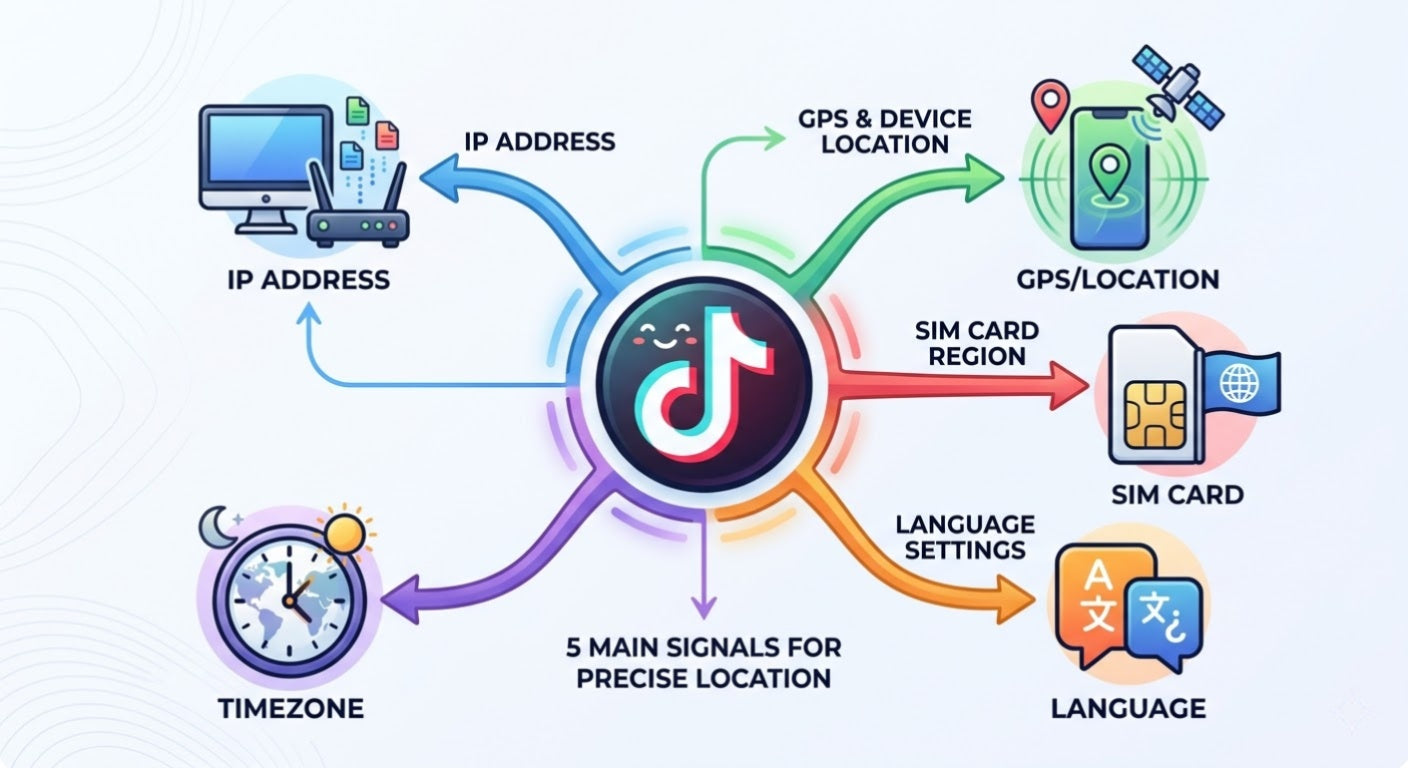
TikTok determines user location by synthesizing several data "signals." This multi-layered approach helps the platform maintain accuracy even when certain signals are weak or restricted.
Location Signals Used by TikTok
To categorize a user into a specific geographic segment, TikTok looks at:
-
IP Address: The primary indicator of a user’s current network location.
-
GPS or Device Location: If the user has granted the app location permissions, GPS provides the most accurate data.
-
SIM Card Region: The country code associated with the mobile carrier.
-
Language Settings: While secondary, language preferences help confirm regional identity.
-
Device Timezone: Useful for verifying the user's general part of the world.
Accuracy and Limitations of Location Targeting
While TikTok’s system is highly advanced, it is not infallible. Users traveling across borders or those utilizing a VPN (Virtual Private Network) can occasionally mask their true location. Furthermore, location data can shift if a user moves or changes their device settings, meaning there is always a small margin of error in any geo-targeted campaign.
How to Set Up TikTok Ads Geo Targeting
Setting up your location parameters is a straightforward process within the TikTok Ads Manager interface. Follow these steps to ensure your filters are applied correctly.
Step 1: Create a Campaign
Log in to your TikTok Ads Manager and click Create. Choose your campaign objective (e.g., Traffic, Lead Generation, or Conversions).
Step 2: Configure Ad Group Targeting
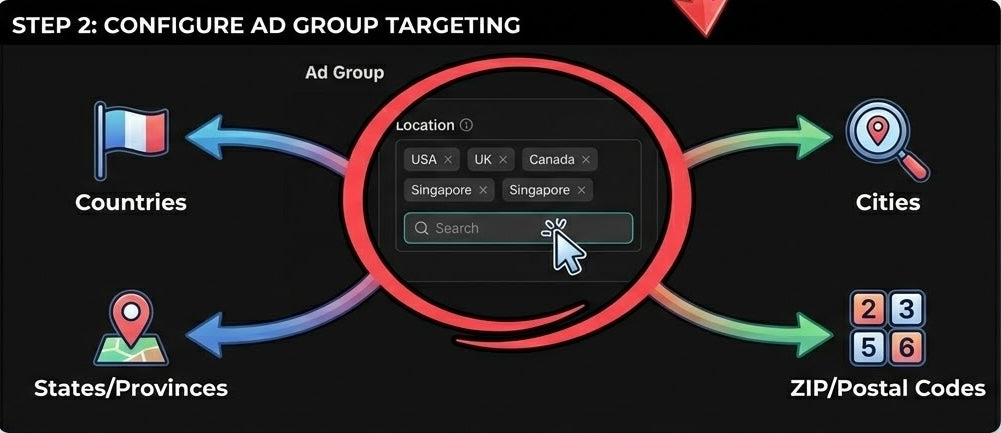
Location targeting is configured at the Ad Group level rather than the campaign level.
Inside the ad group settings, navigate to the audience targeting section and locate the Location field.
This section allows advertisers to specify the geographic areas where ads should be shown.
Step 3: Select Target Locations
Advertisers can then choose specific locations depending on their strategy.
Available options may include:
• countries
• states or provinces
• cities
• ZIP or postal codes
• DMA regions (in supported markets)
Multiple locations can be added within the same ad group.
For advertisers running multi-region campaigns, this flexibility allows them to target several markets simultaneously.
Step 4 Combine with Audience Filters
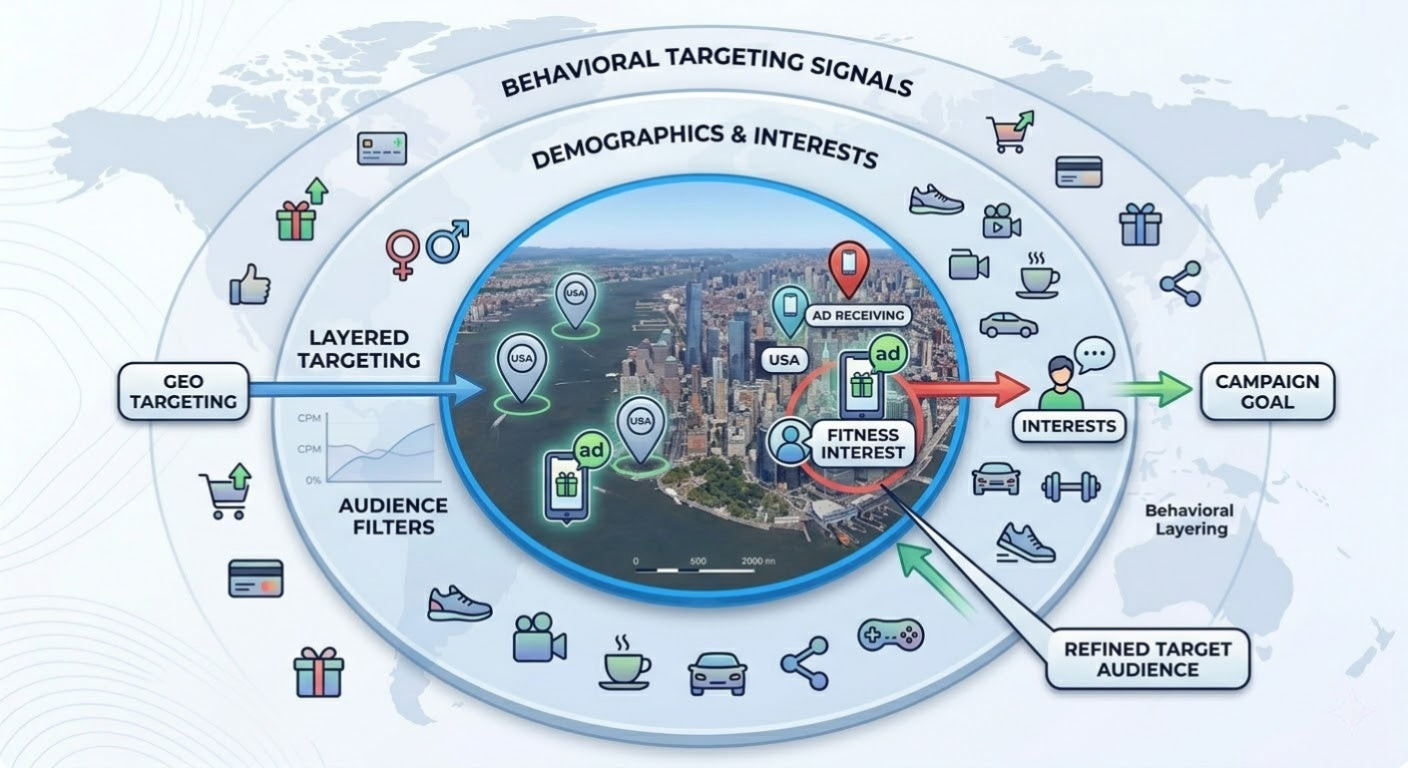
Geo targeting becomes significantly more powerful when combined with other audience filters.
Advertisers can layer location targeting with:
• demographics such as age or gender
• interest-based targeting
• behavioral targeting signals
This layered approach helps refine the audience and ensures ads are shown to users who are both geographically relevant and behaviorally aligned with the campaign goal.
Advanced Geo Targeting Techniques
Once basic location targeting is configured, experienced advertisers often apply additional strategies to improve performance.
Advanced techniques help maximize campaign efficiency and uncover new opportunities in regional markets.
Using Geo-Fencing for Hyper-Local Campaigns
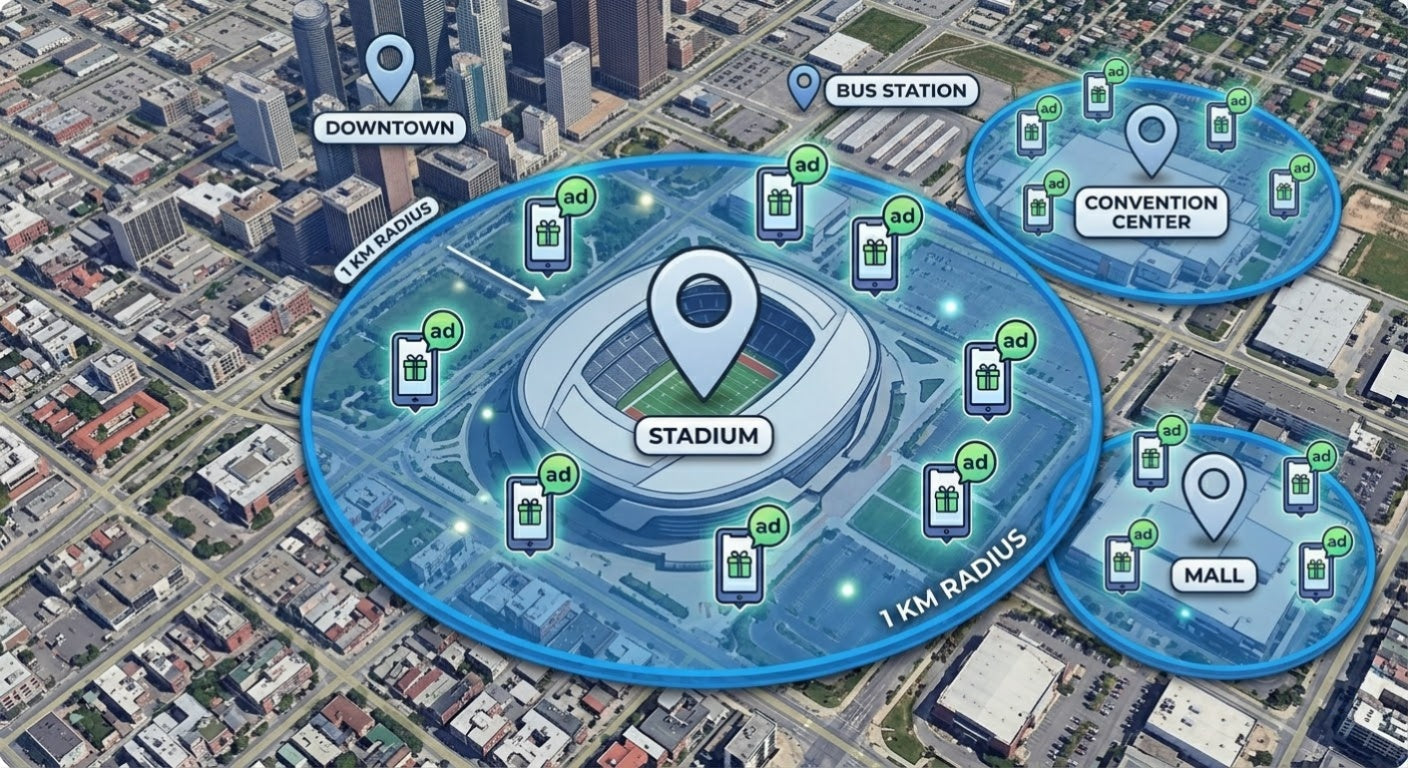
Geo-fencing is a strategy where advertisers focus campaigns around very specific locations.
Instead of targeting entire cities, campaigns are designed to reach users within a limited radius of a particular place.
Typical examples include targeting users near:
• shopping malls
• stadiums
• conference venues
• airports
Geo-fencing is particularly effective for time-sensitive promotions or event-based marketing campaigns.
Combining Geo Targeting with Audience Segments
Location targeting works best when combined with audience segmentation.
Advertisers often layer geographic targeting with additional filters such as:
• demographic attributes
• interests
• purchase behavior signals
For example, a campaign targeting fitness products may focus on users located in major urban areas while also filtering for fitness-related interests.
This combination ensures the campaign reaches both the right location and the right type of user.
Multi-Location Campaign Strategy
Large campaigns often involve multiple geographic markets.
Instead of creating a single global ad group, advertisers may divide campaigns into multiple ad groups based on location clusters.
For example:
• one ad group for North America
• another for Europe
• another for Southeast Asia
This structure allows advertisers to analyze performance across regions and adjust budgets accordingly.
In large campaigns, advertisers may target hundreds or even thousands of geographic locations within a single campaign structure.
Best Practices for TikTok Ads Geo Targeting
Effective geo-targeting requires more than simply selecting locations. Advertisers must continuously test and refine their approach to maximize campaign performance.
Create Location-Specific Ad Creatives
Ads that reflect local culture or regional context often perform better than generic creatives.
Examples include:
• referencing local landmarks
• highlighting regional events
• using culturally relevant messaging
Localized creatives help audiences feel that the content is more relevant to them.
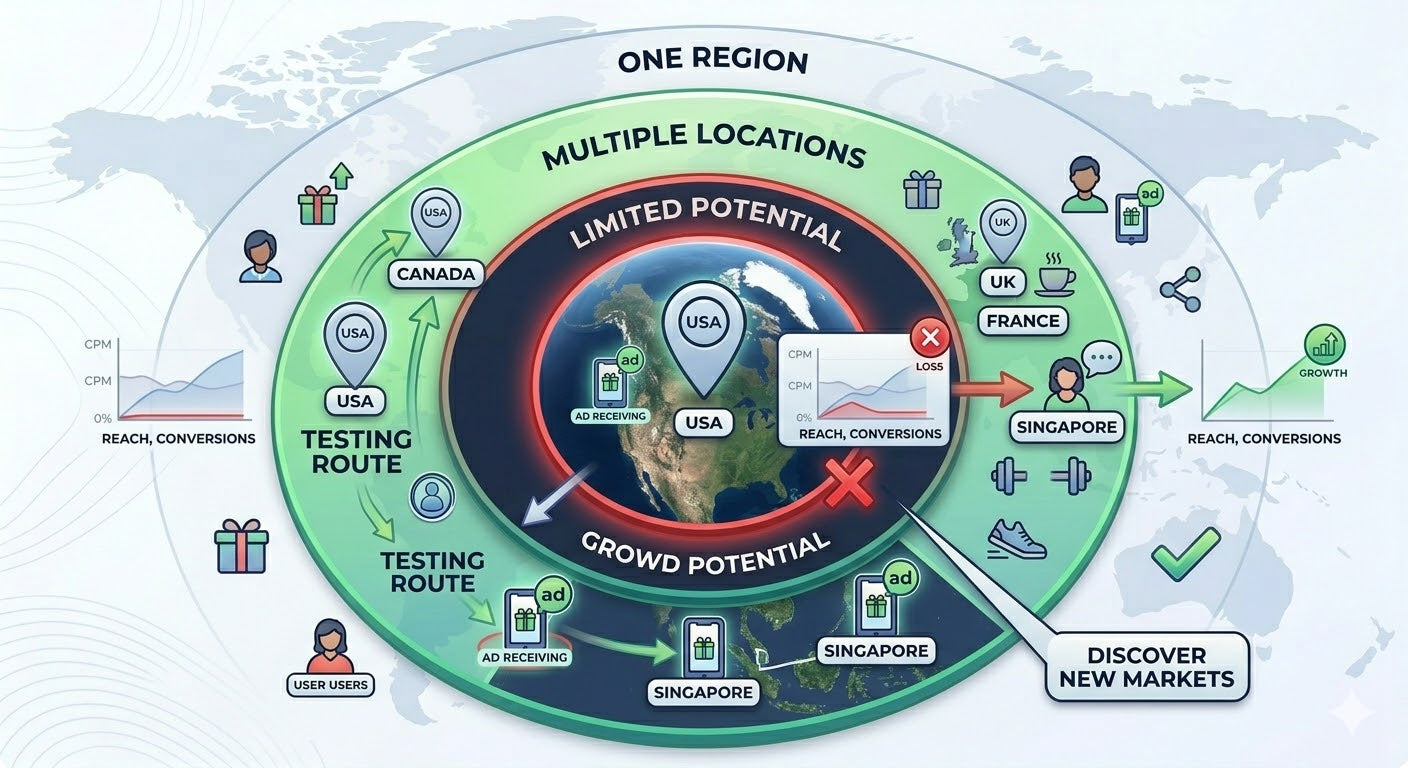
Test Multiple Regions
Even experienced advertisers cannot always predict which markets will perform best.
Running campaigns across several regions allows advertisers to identify high-performing locations.
Once strong regions are identified, budgets can be shifted toward those markets.
Monitor Regional Performance Metrics
Location-based campaigns should be analyzed at the regional level.
Key metrics to monitor include:
• CPM by region
• CTR by location
• conversion rate by market
These insights help advertisers understand where campaigns are delivering the strongest results.
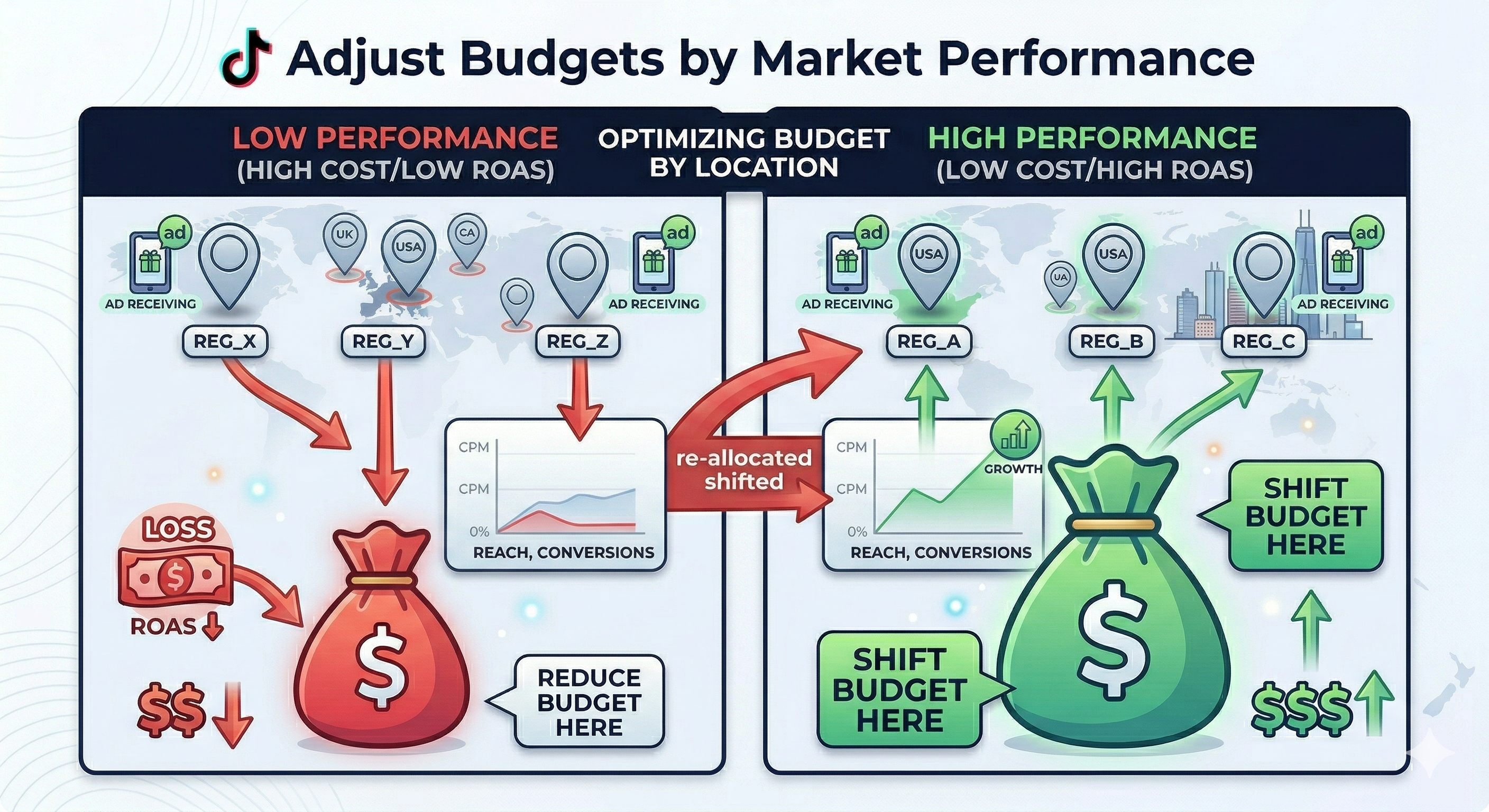
Adjust Budgets by Market Performance
Not all geographic markets generate the same return on ad spend.
Advertisers should gradually shift budget toward locations that demonstrate higher conversion rates or stronger engagement.
This approach ensures that advertising spend is focused on the most profitable regions.
Common Mistakes to Avoid When Using Geo-Targeting
Even experienced advertisers sometimes misconfigure location targeting. Avoiding common mistakes can prevent unnecessary performance issues.
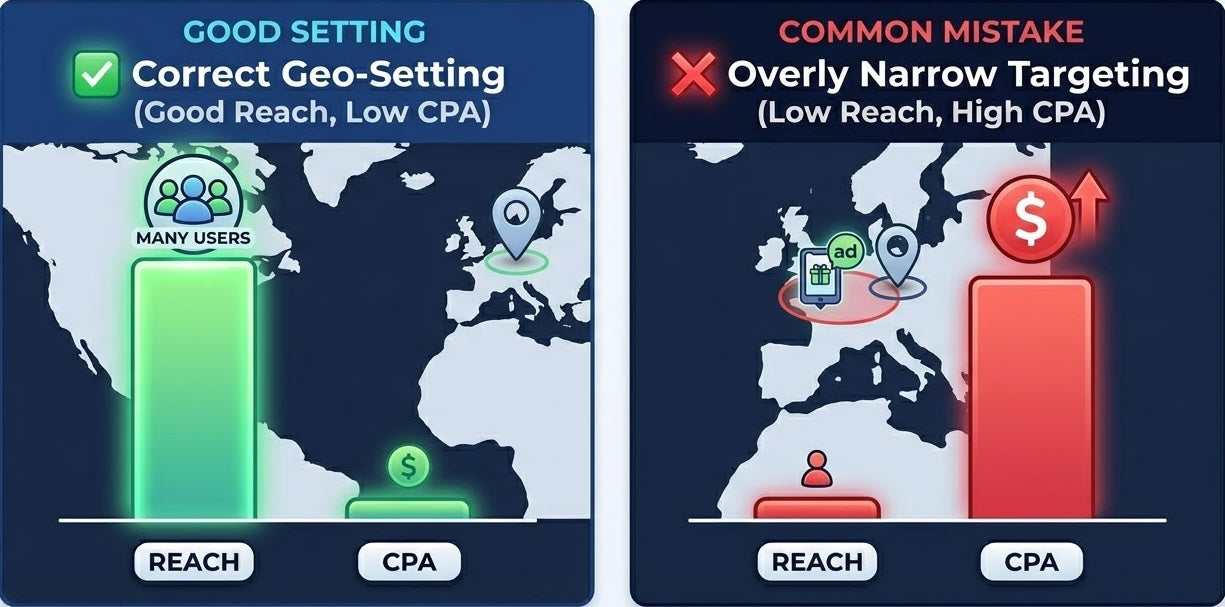
Overly Narrow Targeting
Targeting extremely small geographic areas can significantly reduce audience size.
When audiences are too small, campaigns may experience limited delivery and higher acquisition costs.
Ignoring Local Content Relevance
Generic ad creatives may fail to resonate with local audiences.
Campaign messaging should reflect local preferences, culture, or regional context whenever possible.
Not Testing Multiple Locations
Focusing only on one region limits growth potential.
Testing multiple locations helps advertisers discover new markets that may perform better than expected.
Using the Same Creative Across All Regions
Different regions often respond differently to the same creative.
Running identical creatives across all markets without testing variations can reduce engagement.
Not Analyzing Regional Data
Many advertisers focus only on campaign-level metrics.
However, performance can vary widely between regions. Without analyzing geographic data, it becomes difficult to optimize campaigns effectively.
FAQs
Does TikTok support city-level targeting?
Yes. Advertisers can target users at the city level in many markets through TikTok Ads Manager.
Can TikTok ads target multiple locations?
Yes. Advertisers can include multiple geographic locations within the same ad group or create separate ad groups for different regions.
Is geo-targeting important for local businesses?
Yes. Local businesses benefit greatly from geo-targeting because it ensures ads are shown to users located within their service areas.
How accurate is TikTok’s location targeting?
TikTok uses a multi-signal approach—combining IP addresses, SIM card regions, and GPS data (when permitted). While highly accurate at the Country and State levels, granular targeting like ZIP codes can have a small margin of error if users are traveling or using a VPN. However, for the vast majority of active users, the data is consistent and reliable for local campaigns.
Can I target multiple locations in a single ad group?
Yes, you can select multiple countries, states, or cities within one ad group. However, a professional tip is to group regions with similar CPMs together. If you bundle a high-competition city like New York with a low-competition rural area, the algorithm may favor the cheaper region, skewing your delivery and data.
Is DMA targeting available in all countries?
No, DMA (Designated Market Area) targeting is currently a feature exclusive to the United States market. It is designed for advertisers who want to align their digital spend with traditional television and radio market boundaries. For other countries, City and State targeting remain the primary options.
Can I exclude certain locations from my campaign?
Absolutely. TikTok allows for "Negative Geo Targeting." You can target an entire State but choose to Exclude specific cities or ZIP codes where you don't offer services or where logistics costs are too high. This is a great way to prevent wasted spend in non-serviceable areas.