
Meta Description: Learn how TikTok Ads behavior targeting works, what signals TikTok uses, and how to build high-performing audience segments for better engagement and conversions.
TikTok ads behavior targeting helps advertisers reach users based on what they actually do on the platform. Instead of relying only on demographics or inferred interests, this targeting method focuses on real engagement signals such as video views, creator interactions, and content engagement patterns.
For performance marketers, these signals provide a clearer picture of user intent. When ads are shown to people who are already interacting with related content, the chances of engagement and conversion increase significantly.
In this guide, we explain how TikTok ads behavior targeting works, what behavioral signals the platform uses, and how advertisers can apply this targeting method to build more effective campaigns.
What Is TikTok Ads Behavior Targeting
TikTok ads behavior targeting allows advertisers to reach users based on their recent actions on the platform. Instead of relying only on demographic data or inferred interests, this method focuses on how users actually interact with content.
These behaviors may include watching videos within certain categories, liking or sharing posts, commenting on content, or interacting with creators. By analyzing these engagement signals, TikTok can group users into behavioral segments that advertisers can target.
This approach helps campaigns reach audiences who are already engaging with relevant content, making ads more likely to receive attention and interaction.
How TikTok Collects Behavior Signals for Ad Targeting
Behavior targeting relies on engagement data generated when users interact with content on the platform. TikTok analyzes these signals to identify patterns and group users based on the types of content they actively engage with.
Video Engagement Signals
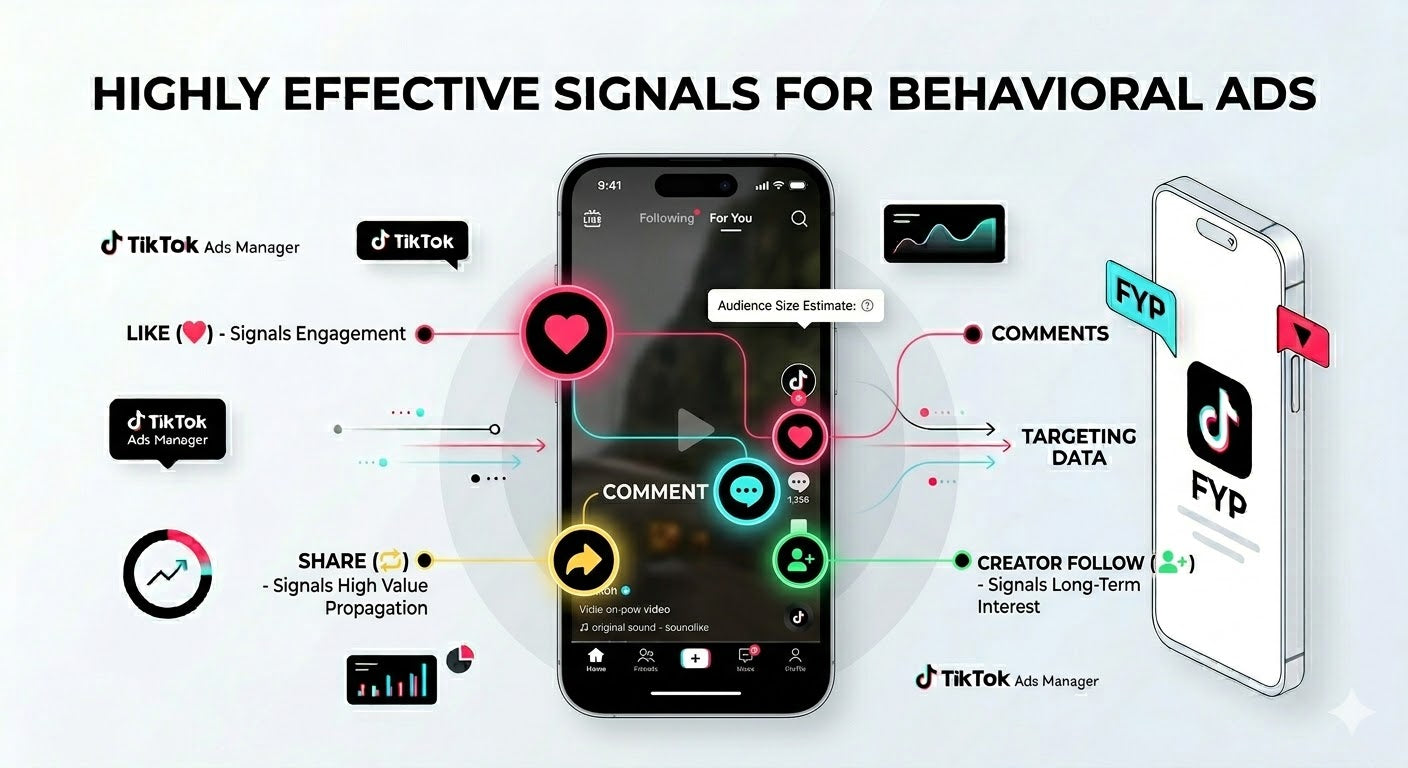
Video interactions are one of the strongest indicators of user behavior on TikTok. The platform tracks several engagement signals, including:
-
video views
-
watch time and completion rate
-
likes and shares
-
comments
Users who consistently engage with videos in the same category are more likely to be grouped into related behavior segments.
Creator Interaction Signals
TikTok also evaluates how users interact with creators.
Important signals include:
-
following creators
-
visiting creator profiles
-
engaging with creator posts
These interactions help the platform understand which types of content ecosystems a user participates in.
Recency of Behavior Signals
Behavior targeting is generally based on recent user activity rather than long-term history. This allows advertisers to reach users whose engagement patterns are still relevant.
For example, a user who recently watched several product review videos may currently be in a product discovery phase. Showing ads during this period increases the chance of engagement or conversion.
How to Set Up TikTok Ads Behavior Targeting
Setting up behavior targeting in TikTok Ads Manager is relatively straightforward, but the way targeting layers are combined can significantly influence campaign performance.
Before configuring targeting, advertisers should have a clear understanding of the audience they want to reach.
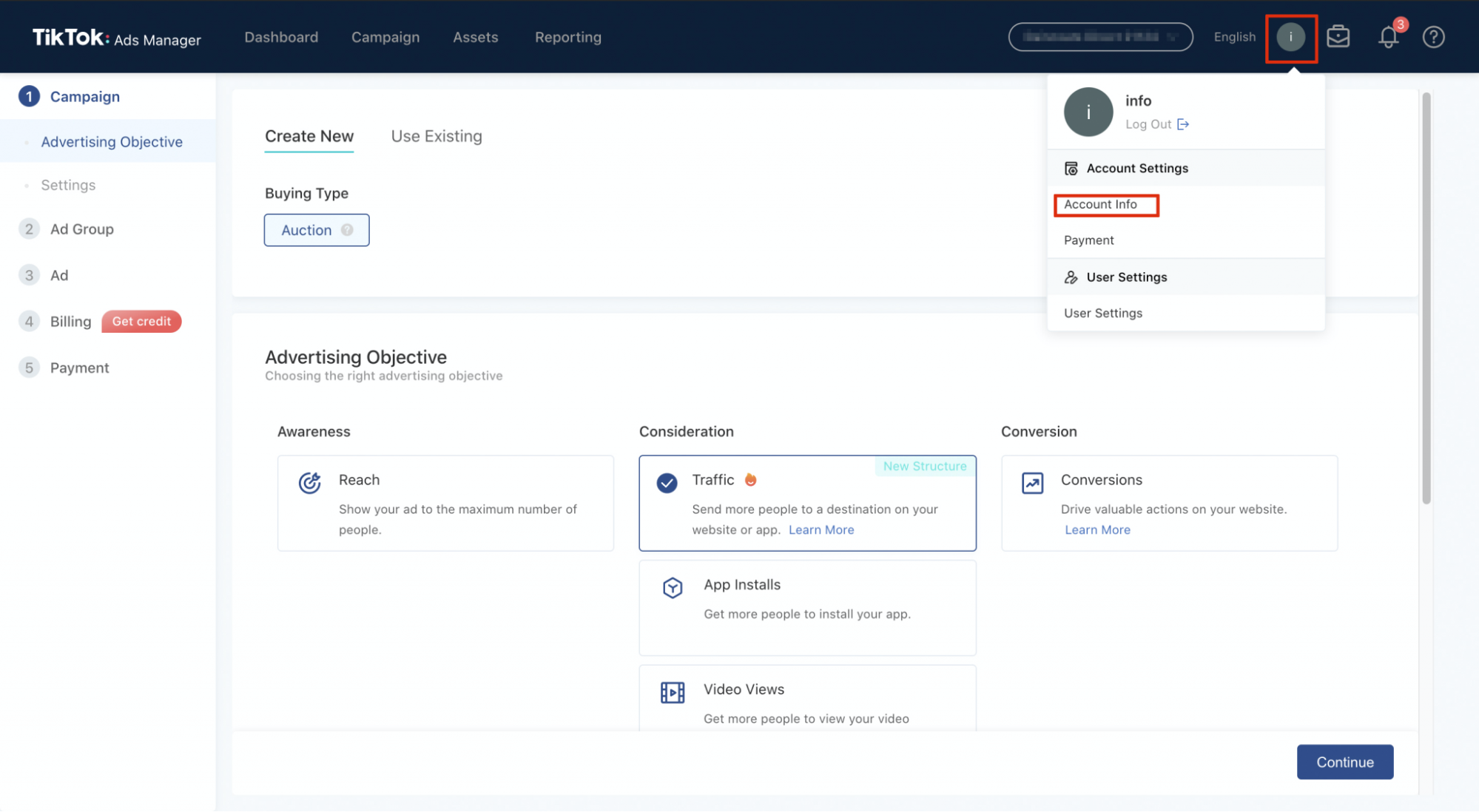
Step 1: Open TikTok Ads Manager
Start by creating a new campaign within TikTok Ads Manager. Choose your campaign objective based on the goal of the campaign, such as traffic, conversions, or lead generation.
Step 2: Navigate to Ad Group Targeting Settings
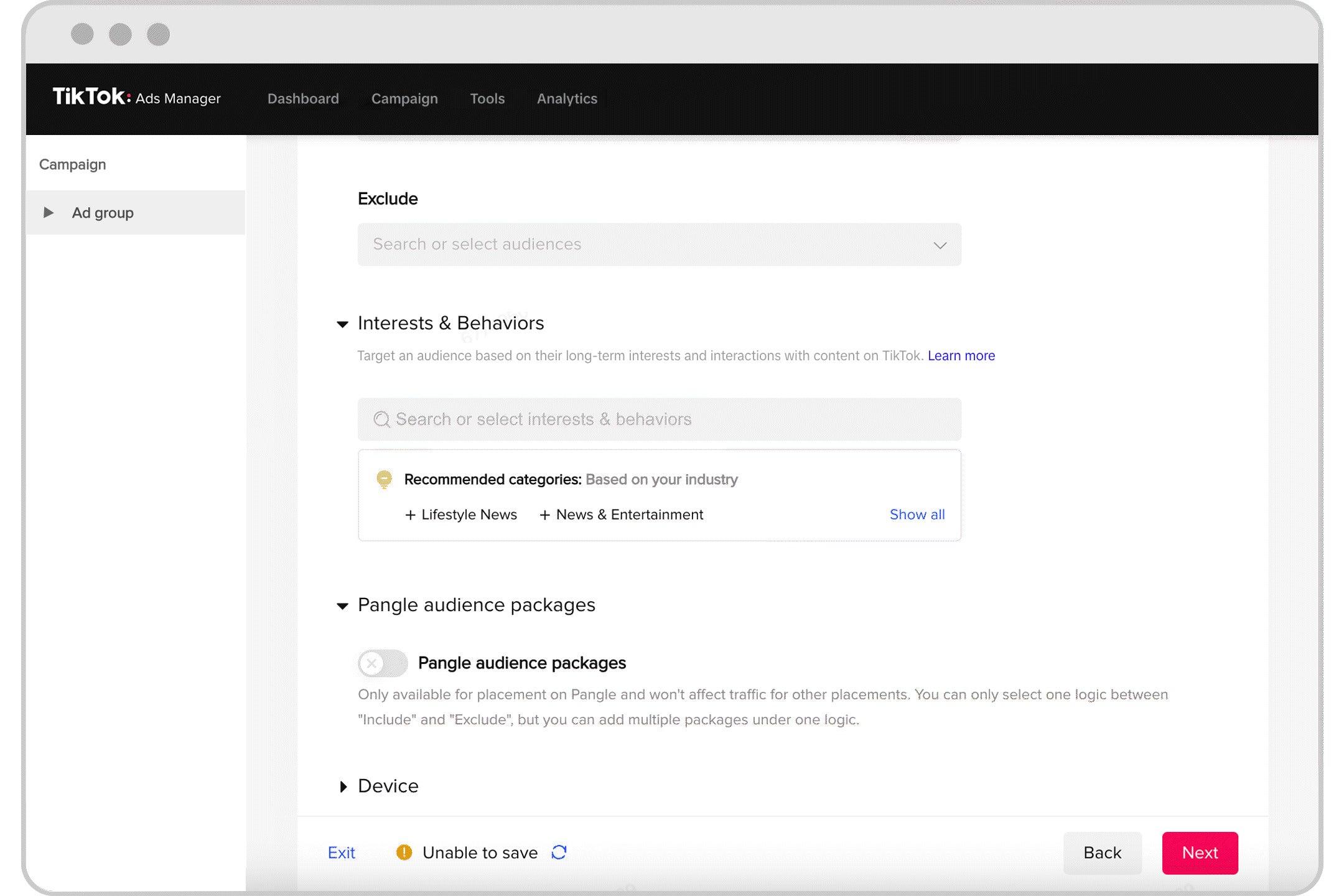
Audience targeting options are configured at the Ad Group level. Within this section, advertisers can define demographic filters, interests, and behavioral targeting options.
Step 3: Select Interest and Behavior Targeting
Inside the targeting panel, select the section that includes interests and behaviors. This is where behavior-based audience segments can be selected.
Step 4: Choose Relevant Behavior Segments
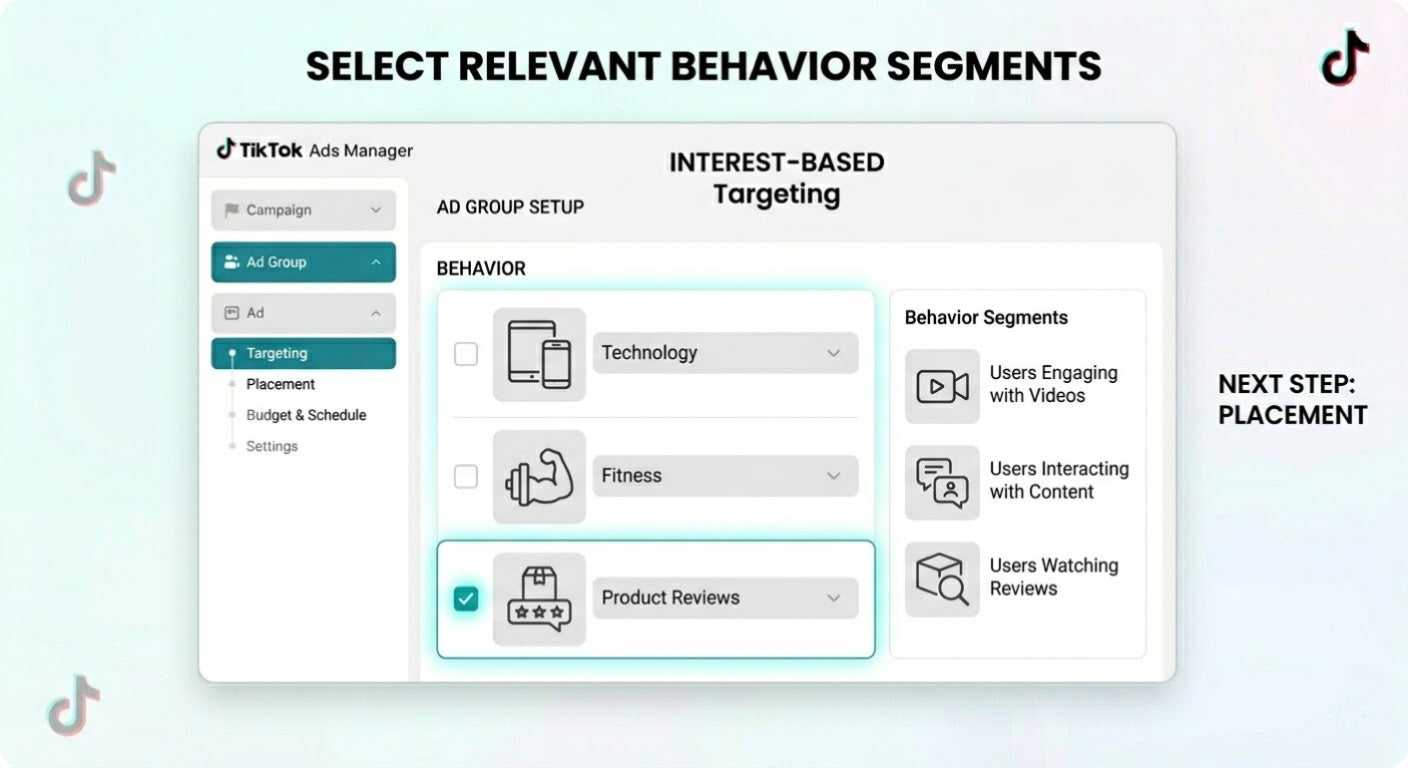
At this stage, advertisers should select behavior categories that align with the campaign’s target audience.
For example:
-
users engaging with technology videos
-
users interacting with fitness-related content
-
users watching product review videos
Selecting behavior categories that closely match the ad creative usually leads to better engagement.
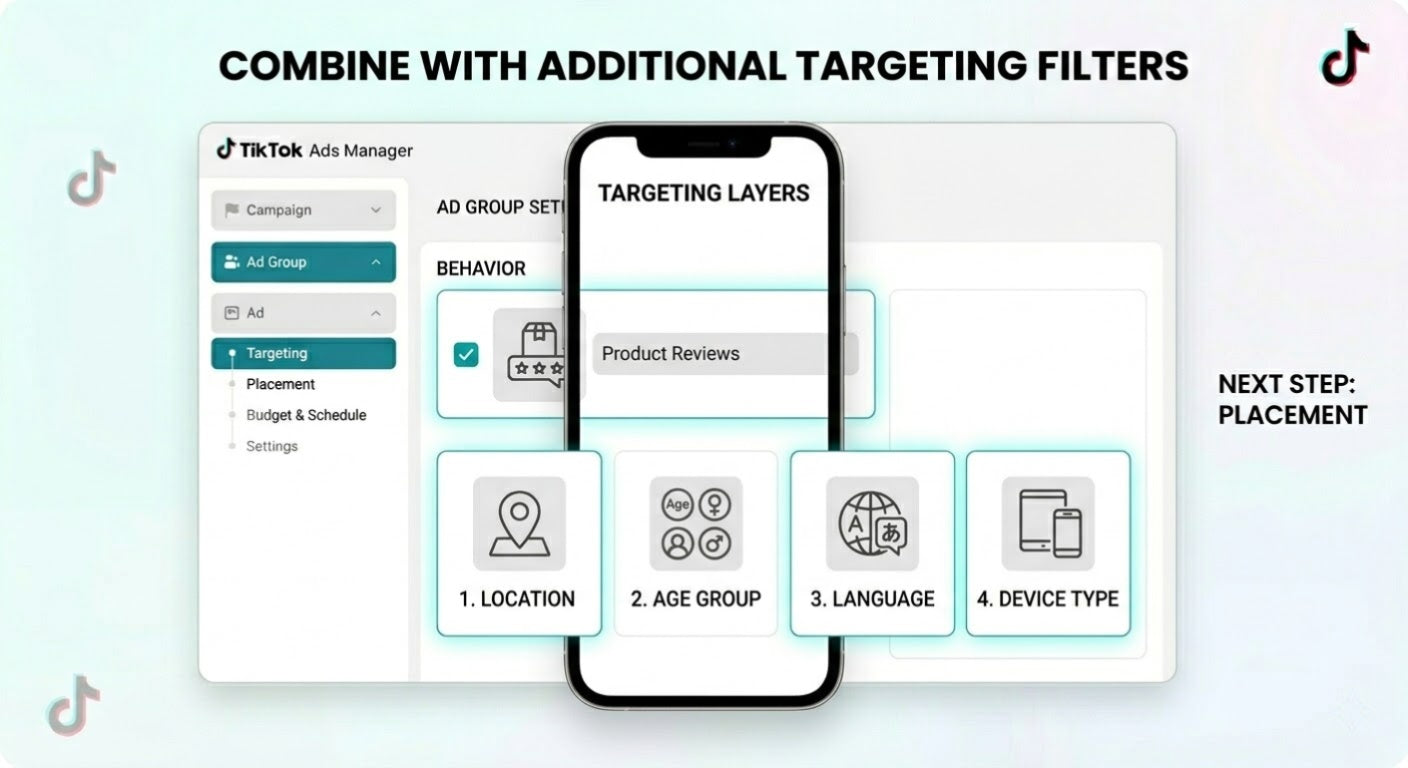
Step 5: Combine With Additional Targeting Filters
Behavior targeting rarely works in isolation. Advertisers often combine it with other filters, such as:
-
location targeting
-
age group
-
language
-
device type
Combining multiple targeting layers allows campaigns to narrow down the audience while still maintaining sufficient scale.
For campaigns that rely on historical data, advertisers may also combine behavior targeting with TikTok lookalike audience segments to expand reach while maintaining audience similarity.
Best Practices for TikTok Behavior Targeting
Although behavior targeting can significantly improve campaign relevance, its effectiveness depends on how it is implemented.
The following best practices can help advertisers get better results.
Start With Broader Behavior Segments
Highly narrow targeting can restrict audience size and limit ad delivery. It is usually better to start with broader behavior categories and then refine based on performance data.
Align Ad Creative With Audience Behavior
Behavior targeting works best when ad creatives closely match the type of content users are already engaging with.
For example, if the audience frequently interacts with tutorial videos, the ad creative should follow a similar format.
Test Multiple Behavior Segments
Instead of relying on a single behavior segment, advertisers should test multiple audience variations.
Different segments may respond differently depending on the creative format and campaign objective.
Monitor Audience Size and Delivery
When building behavior-based audiences, it is important to monitor the estimated audience size. Audiences that are too small can reduce campaign delivery and increase costs.
Regular monitoring allows advertisers to adjust targeting before delivery issues occur.
Advanced TikTok Behavior Targeting Strategies
Once the basic setup is understood, advertisers can begin applying more advanced strategies that take advantage of how behavior targeting interacts with other audience layers.
These strategies are particularly useful for experienced media buyers managing performance-driven campaigns.
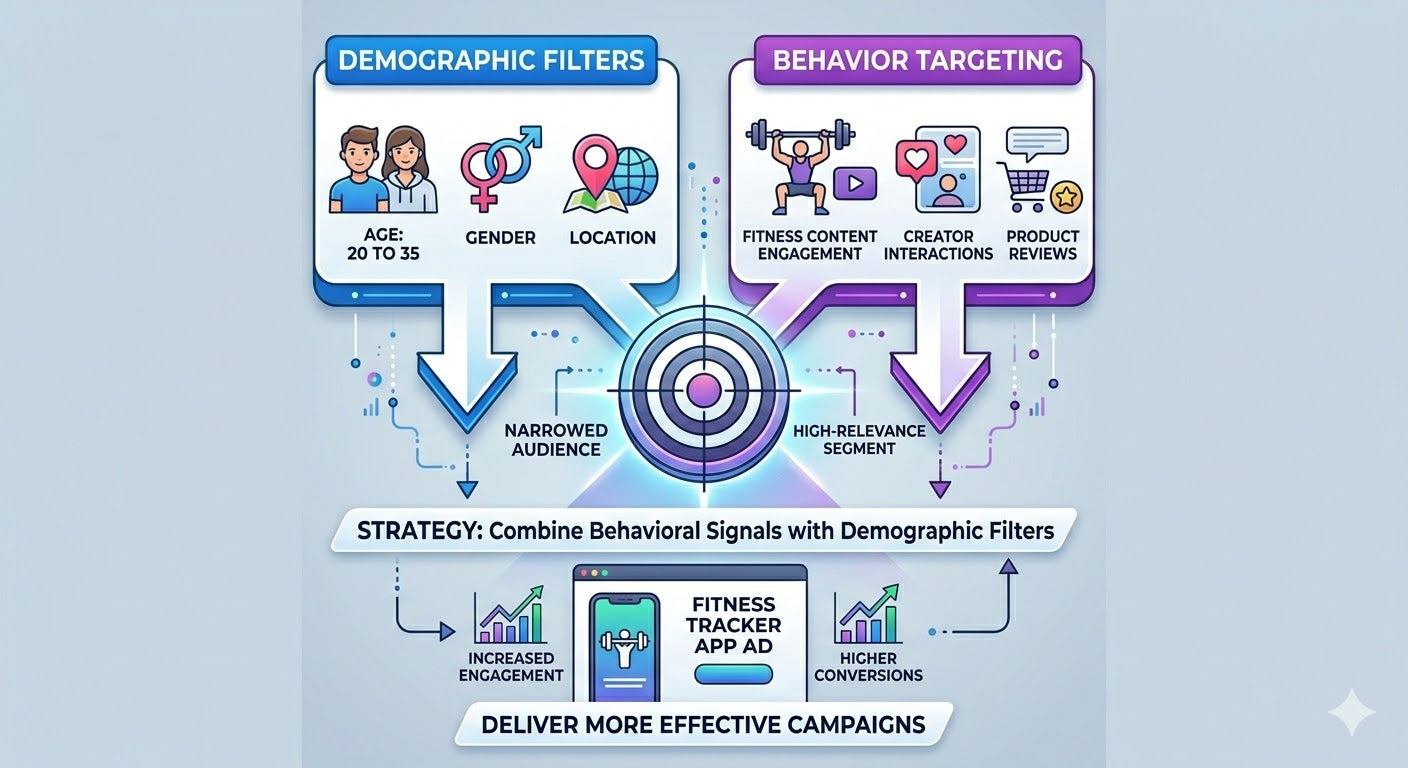
Combine Behavior Targeting With Demographic Filters
One common strategy is to combine behavioral signals with demographic targeting.
For example:
”Users engaging with fitness content” combined with “ages 20 to 35”
This approach narrows the audience to people who both fit the demographic profile and actively engage with relevant content.
Layer Behavior and Interest Targeting
Another strategy involves layering both interest and behavior signals.
For example:
-
Interest targeting: fitness
-
Behavior targeting: users frequently watching workout tutorials
This layered targeting method helps identify users who both show interest in a topic and actively interact with related content.
Use Behavior Signals for Retargeting Campaigns
Behavior targeting can also be integrated into retargeting strategies.
For instance, advertisers may target users who:
-
previously engaged with brand content
-
interacted with product videos
-
visited a landing page
Combining these signals with TikTok retargeting ads can help bring back users who have already shown interest in the product or service.
Behavior Targeting for Ecommerce Campaigns
For ecommerce advertisers, behavior targeting is particularly useful when promoting products that rely on visual discovery.
Targeting users who frequently interact with:
-
product demonstrations
-
product comparisons
-
unboxing videos
can help ensure ads are shown to audiences already in product exploration mode.
Common Mistakes to Avoid
Even experienced advertisers can make mistakes when implementing behavior targeting. Avoiding these common pitfalls can help maintain campaign efficiency.
Targeting Too Many Behavior Signals
Stacking too many behavior categories together can dramatically reduce audience size. This may cause campaigns to struggle with delivery.
Ignoring Creative Relevance
Behavior targeting only works if the ad creative matches the user’s content preferences. Ads that feel unrelated to the user’s interests will likely be ignored.
Over-Segmenting Audiences
Creating too many small segments can make campaigns difficult to scale and manage.
Not Testing Broader Audiences
In some cases, TikTok’s algorithm performs better with larger audiences. Testing broader targeting can sometimes improve performance.
Failing to Refresh Targeting Segments
User behavior changes quickly on short-form video platforms. Targeting strategies should be reviewed and updated regularly.
How Behavior Targeting Impacts TikTok Ads Performance
When implemented correctly, behavior targeting can significantly influence campaign outcomes.
Understanding these performance impacts helps advertisers decide when to prioritize this targeting method.
Higher Engagement Rates
Ads shown to users who already engage with related content tend to receive higher interaction rates. This improves metrics such as click-through rate and video engagement.
Better Ad Relevance
Behavior targeting ensures that ads appear within a content environment that aligns with user preferences. This increases the likelihood that users will view the ad positively.
Improved Conversion Potential
Users who actively engage with product-related content are often further along in the purchase journey. Showing ads to these audiences increases the chances of conversion.
FAQs About TikTok Ads Behavior Targeting
What is behavior targeting in TikTok ads?
Behavior targeting allows advertisers to reach users based on recent actions they have taken on the platform, such as video engagement or creator interaction.
What behaviors can TikTok use for ad targeting?
Common signals include video views, video completion, likes, comments, shares, and interactions with creators.
Is behavior targeting better than interest targeting?
Behavior targeting is often more precise because it reflects recent user activity. However, interest targeting may still be useful for broader audience discovery.
How often should advertisers update behavior targeting?
Targeting strategies should be reviewed regularly, especially when campaign performance changes or when audience behavior patterns shift.
Can behavior targeting improve conversion rates?
Yes. When behavior targeting aligns with the ad creative and campaign objective, it can increase engagement and conversion potential.