
For more than two decades, Google Search has been a fundamental part of how people navigate the internet. Users became familiar with the classic experience of seeing “10 blue links” in search results, along with an implicit expectation: when someone clicks a result, they will land on the exact webpage represented by that link.
Recently, however, Google has started experimenting with AI-generated headlines that replace the original titles of news articles in search results. After introducing similar changes in the Google Discover news feed, the company is now testing adjustments to headlines within the traditional search listings as well.
Several examples suggest that Google’s system sometimes replaces the original headlines written by publishers with alternative versions generated by AI. In some cases, these modified headlines can simplify or alter the meaning of the original title.
For instance, one article originally titled:
“I used the ‘cheat on everything’ AI tool, and it didn’t help me cheat on anything.”
was shortened in search results to just five words:
“‘Cheat on everything’ AI tool.”
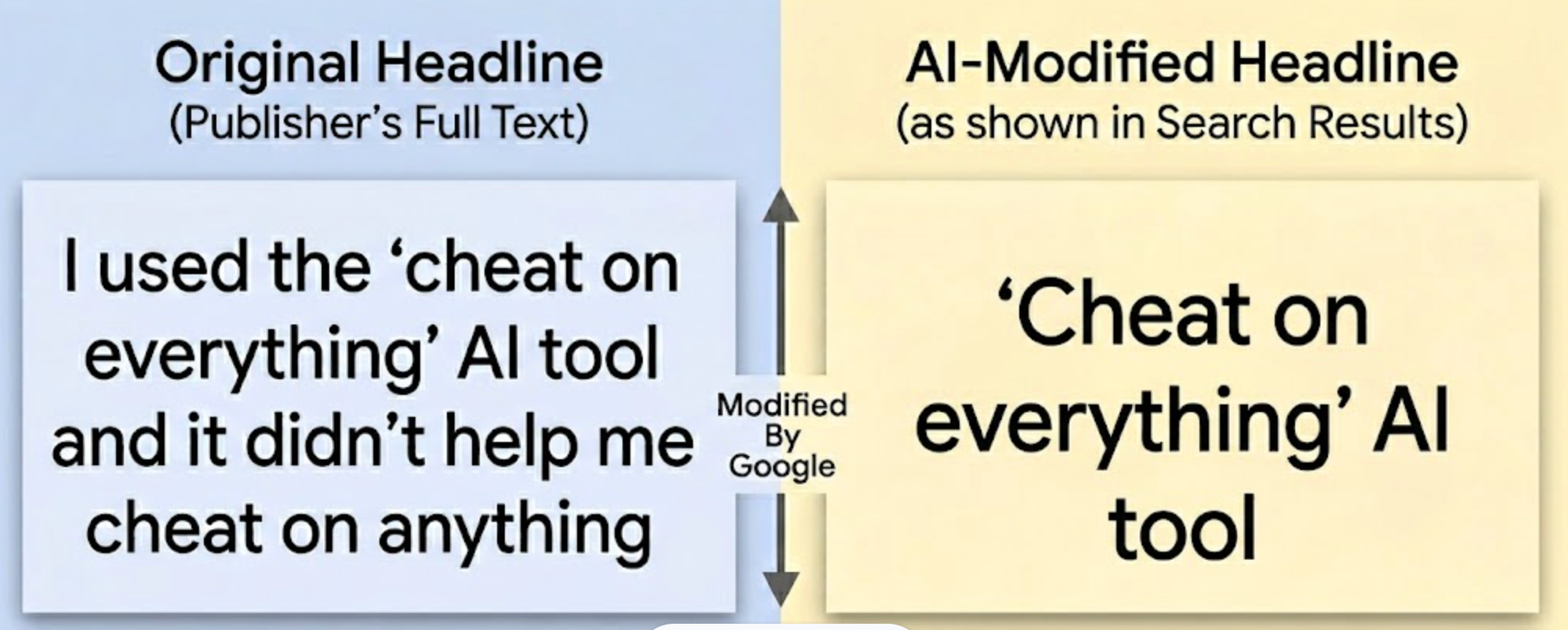
Such a condensed headline could easily give readers the impression that the article supports or promotes the tool, even though the original content does not recommend it.
According to Google spokespersons Jennifer Kutz, Mallory De Leon, and Ned Adriance, this feature is currently part of a limited and small-scale experiment that has not yet been approved for a broader rollout. However, the company did not provide specific details about how extensive the testing actually is.
Google has also stated that it is experimenting with how various types of websites appear in search results, not only news publishers.
This practice has raised concerns among publishers and journalists. Some critics compare the situation to a bookstore removing the original covers from books on display and replacing them with new titles. Newsrooms typically invest significant time crafting headlines that are accurate, engaging, and appealing without relying on misleading clickbait. When platforms automatically modify these titles, publishers may lose control over how their work is presented to readers.
For now, the number of modified headlines appearing in Google Search appears to be relatively limited. The issue has not yet reached the same level of confusion seen in some examples from Google Discover.
In the past, Google Discover has displayed misleading headlines. One example claimed that PlayStation Portal was receiving a 1080p streaming mode, when in reality the update only introduced a higher bitrate. Another headline suggested that the United States had reversed a ban on foreign drones, while the article itself reported the opposite.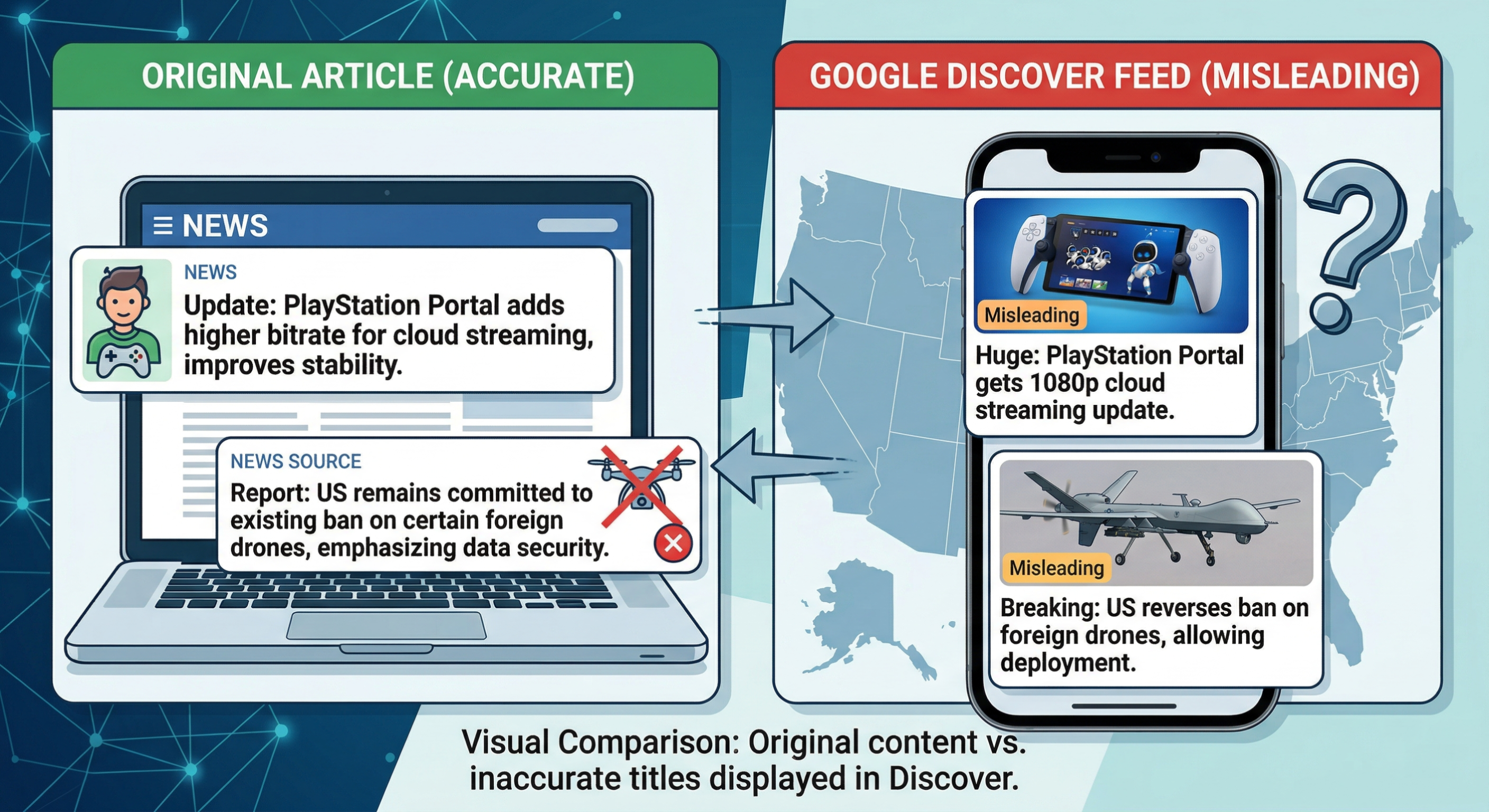
Compared with those examples, the AI-modified headlines currently appearing in Google Search appear less misleading, though the practice still raises important questions about how search platforms use artificial intelligence to present publishers’ content.