
The pet care industry is no longer a simple retail sector; it is a multi-billion-dollar ecosystem driven by the "humanization" of pets. For experienced marketers and niche specialists, the challenge isn’t just about reaching pet owners—it's about cutting through the noise in a market saturated with generic "cute dog" imagery. Success in this space requires a sophisticated blend of emotional storytelling, technical SEO, and data-driven performance marketing.
Whether you are scaling a D2C pet supplement brand or expanding a nationwide grooming franchise, your strategy must pivot from basic awareness to deep-rooted trust. This guide explores high-level pet care marketing strategies designed to convert modern "pet parents" into lifelong brand advocates.
Effective Pet-Care Marketing Strategies
To dominate the pet industry, you must move beyond surface-level tactics. The following strategies focus on building a robust marketing engine that leverages both psychological triggers and technical precision.
1. Define and Understand Your Target Pet Owner Audience
Effective marketing begins with granular segmentation. Modern pet owners are not a monolith; a Gen Z owner of a "designer" goldendoodle has vastly different spending habits than a rural owner of working farm dogs.
-
Segment by Species and Breed: Tailor your messaging to specific needs (e.g., high-protein diets for active breeds vs. joint support for seniors).
-
Psychographic Profiling: Identify "Pet Parents" (who treat pets as children) vs. "Utility Owners" (who view pets as companions or workers).
-
Behavioral Data: Track spending patterns, frequency of vet visits, and preferred shopping channels (Amazon vs. boutique e-commerce).
2. Build a Unique and Trustworthy Pet Care Brand Identity
In a niche built on care, your brand identity is your "digital handshake." Professional marketers know that a logo isn't a brand; a brand is a promise of safety and quality.
-
Consistency is Key: Ensure your tone of voice and visual assets are uniform across Meta ads, Google Search, and your website.
-
Core Values: Clearly communicate your stance on animal welfare, ingredient sourcing, or community involvement.
3. Lean Into Lifestyle and Emotional Branding
Pet owners don't buy products; they buy the "result" of a happy, healthy pet.
-
Sell the Lifestyle: Use imagery that depicts the joy of a pain-free walk or the peace of mind of a secure kennel.
-
The "Family Member" Angle: Frame your services as essential care for a family member, which naturally reduces price sensitivity.

4. Highlight Benefits Over Product Features
Expert advertisers know that "grain-free" (feature) matters less than "no more itchy skin" (benefit).
-
The "So What?" Test: For every technical spec, explain the direct impact on the pet’s quality of life.
-
Outcome-Based Messaging: Focus on longevity, vitality, and happiness.
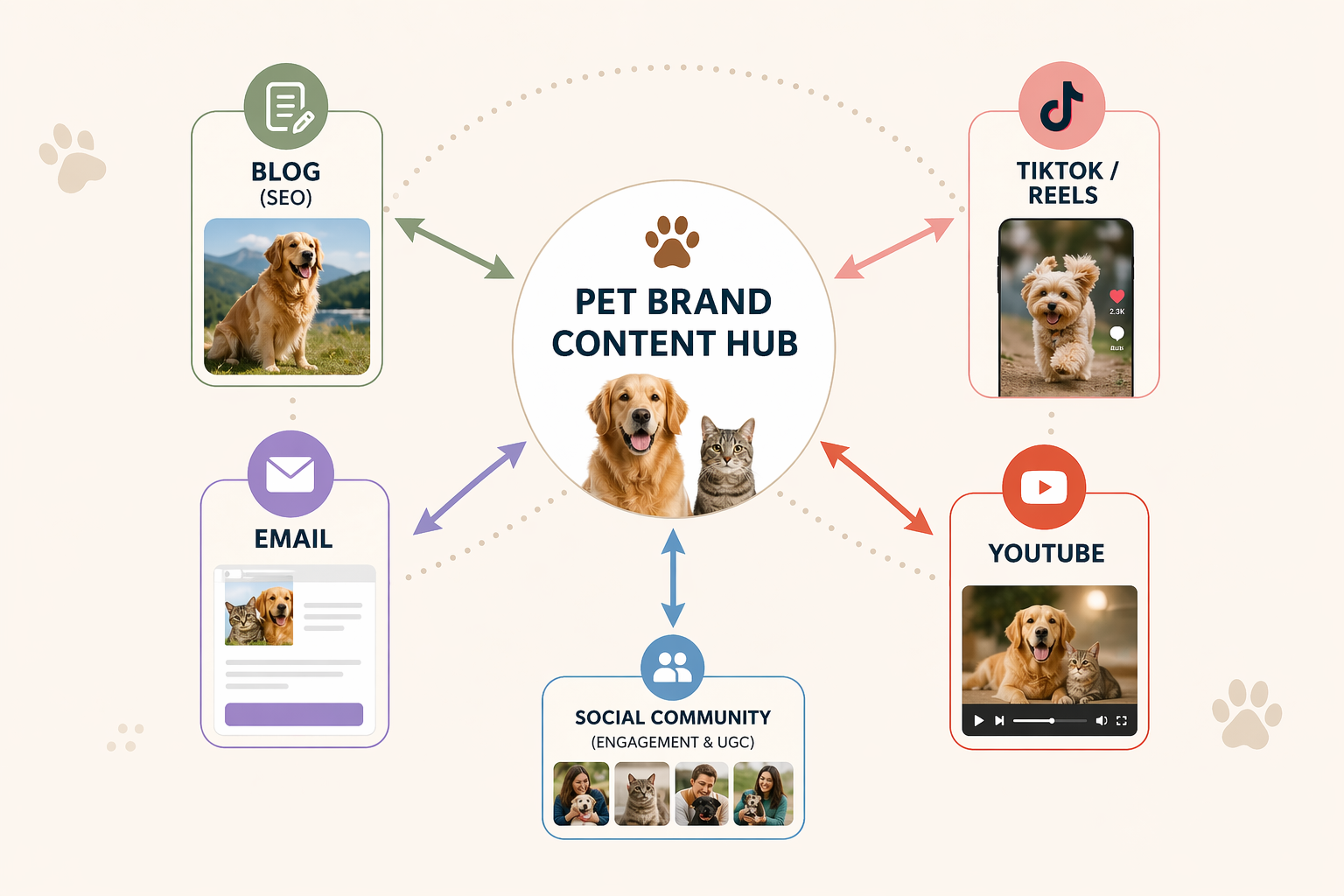
5. Create an Educational Content Hub
Content is the backbone of organic growth and retargeting sequences. By positioning your brand as an authority, you reduce the friction of the sale.
-
Diverse Formats: Mix long-form blogs for SEO with short-form videos for TikTok and Instagram.
-
Expert Contributions: Collaborate with veterinarians or certified behaviorists to validate your content.
6. Educate First, Sell Second
Aggressive sales tactics often backfire in the pet niche. Instead, use a "value-first" funnel.
-
The Lead Magnet: Offer a "New Puppy Checklist" or a "Senior Cat Nutrition Guide" to capture emails before pitching a product.
-
Nurture Sequences: Use email automation to provide tips related to the lead magnet, building trust over time.
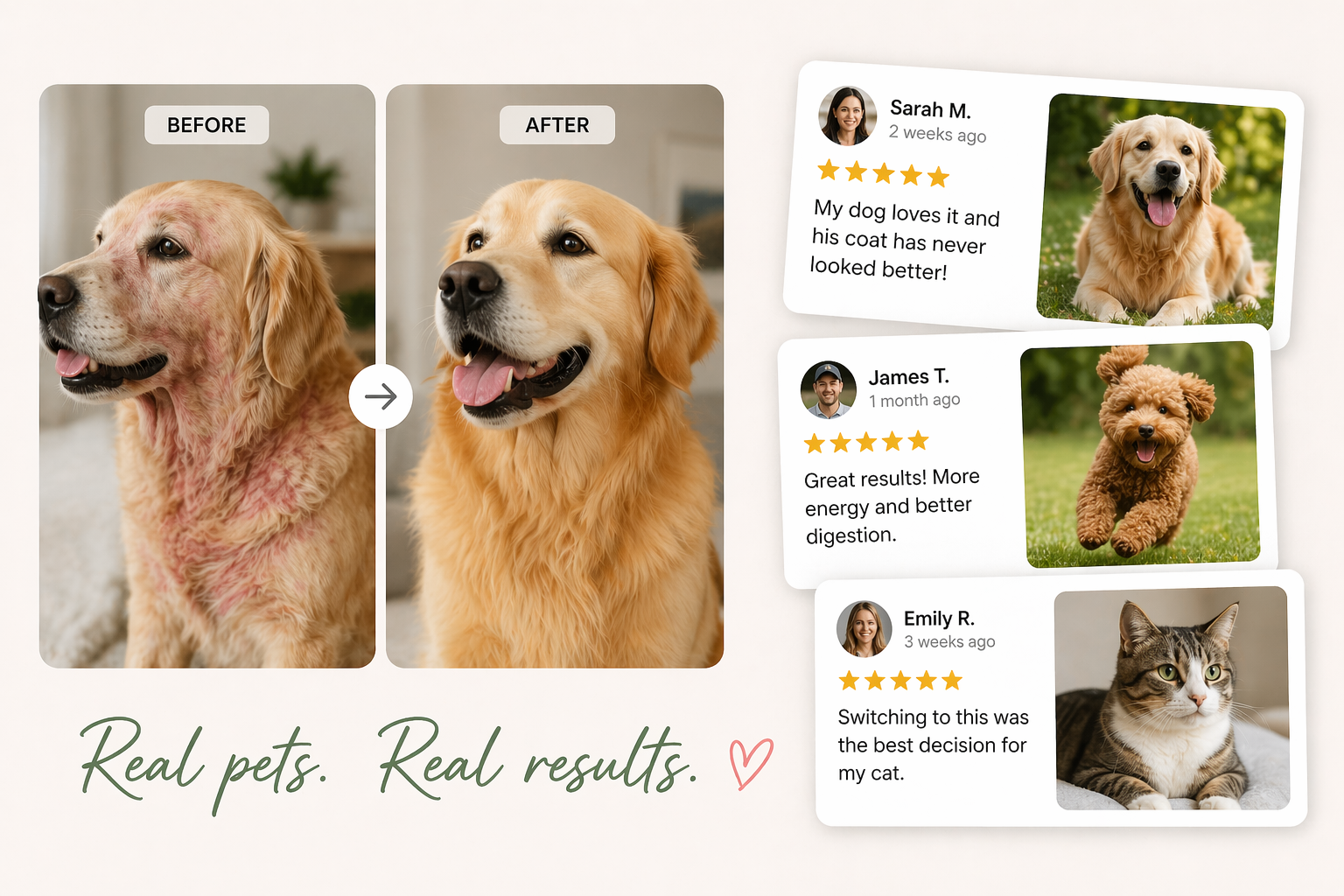
7. Leverage Social Proof and User-Generated Content (UGC)
Pet owners trust other pet owners more than they trust brands.
-
UGC in Ads: Run Meta ads featuring "unboxing" videos or "day in the life" clips from real customers. These often outperform high-production studio shoots.
-
Before-and-After: For supplements or grooming, visual proof of transformation is the ultimate conversion tool.
8. Tie Marketing Claims to Credibility and Transparency
In an era of "greenwashing," transparency is a competitive advantage.
-
Certificate of Analysis (COA): If selling supplements, make your lab results easily accessible.
-
Ingredient Sourcing: Clearly state where your proteins or materials come from.
9. Focus on Sustainable and Ethical Messaging
The modern pet owner is increasingly eco-conscious.
-
Eco-Friendly Packaging: Highlight biodegradable or recyclable materials.
-
Ethical Standards: Mention "cruelty-free" testing or "sustainably caught" fish to appeal to the premium segment.
10. Build an SEO-Optimized Website and Strengthen Online Presence
Technical SEO is non-negotiable for scaling.
-
Core Web Vitals: Optimize for mobile speed, as most pet-related searches happen on the go.
-
Schema Markup: Use Product and Review schema to stand out in Google Search Results.
11. Use Local SEO to Capture Nearby Pet Owners
For brick-and-mortar services like vets or daycares, local search is your primary lead generator.
-
Google Business Profile (GBP): Keep your hours, photos, and reviews updated daily.
-
Local Keywords: Target phrases like "best dog trainer in [City Name]" or "emergency vet near me."
12. Spark Two-Way Engagement on Social Media
Social media should be a community, not a billboard.
-
Interactive Content: Use polls on Instagram Stories (e.g., "Which toy does your dog prefer?").
-
Community Groups: Create a Facebook Group for your customers to share photos and advice.
13. Partner with Pet Influencers and Strategic Brand Collaborations
Micro-influencers often have higher engagement rates and more loyal followers than celebrities.
-
Strategic Alignment: Partner with influencers who share your brand's specific niche (e.g., raw-feeding advocates or agility trainers).
-
Cross-Promotions: Collab with non-competing brands (e.g., a pet food brand partnering with a bowl manufacturer).
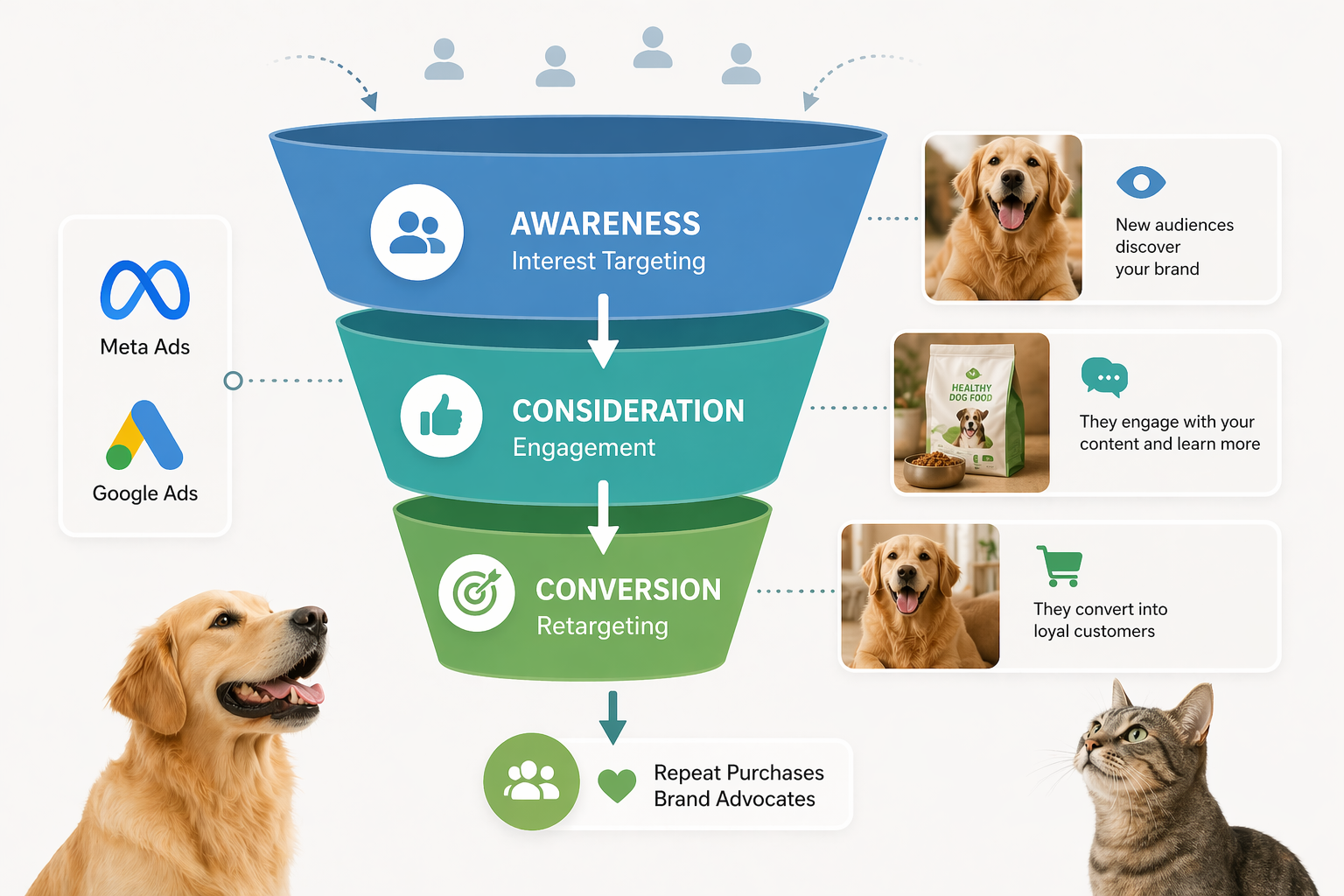
14. Launch Targeted Paid Advertising Campaigns
Move beyond basic "Interest" targeting.
-
Lookalike Audiences (LAL): Use your customer list to find high-value "twins" on Meta and Google.
-
Retargeting: Show specific ads to users who abandoned their carts or spent time on specific product pages.
15. Leverage Omnichannel Marketing for Consistent Visibility
Ensure your brand is everywhere your customer is.
-
Unified Messaging: Your SMS marketing should complement your email flows and social ads.
-
Offline Integration: Use QR codes on packaging to bridge the gap between physical products and digital loyalty programs.
Common Mistakes to Avoid in Pet Care Marketing
Even with a high budget, certain pitfalls can drain your ROI. Understanding these common errors is crucial for maintaining a lean, effective marketing machine.
-
Over-Generalizing the Audience: Treating all dog owners the same is a recipe for high CPA (Cost Per Acquisition). A Chihuahua owner has different pain points than a Great Dane owner. Fail to segment, and you fail to resonate.
-
Ignoring Negative Reviews: In the pet industry, one bad review regarding safety can go viral. Neglecting your reputation management or failing to respond empathetically to complaints can destroy years of brand building.
-
Focusing Solely on "Cute" Content: While pets are adorable, "cute" doesn't always convert. If your content lacks a clear call to action (CTA) or fails to address a specific problem, you are running a fan page, not a business.
-
Neglecting Mobile Optimization: Pet owners often search for solutions while at the park or the vet. If your site is slow or hard to navigate on a phone, you will lose the "immediate need" customer to a competitor.
-
Violating Platform Policies on Health Claims: Meta and Google are strict about health-related claims for animals. Avoid using "cure" or "prevent" without clinical backing, as this can lead to an account ban.
-
Inconsistent Posting and Engagement: The algorithm rewards consistency. Ghosting your social media for weeks tells potential customers (and search engines) that your business might be stagnant.
FAQs
What are the benefits of pet-care marketing?
Effective marketing in this sector builds brand equity and customer lifetime value (LTV). Unlike other retail sectors, pet owners are incredibly loyal; once you win their trust, they rarely switch brands, leading to high recurring revenue and lower long-term acquisition costs.
How can pet businesses measure marketing success?
Beyond standard metrics like ROAS (Return on Ad Spend), focus on:
-
Customer Acquisition Cost (CAC) vs. LTV: How much does it cost to get a customer vs. how much they spend over 5 years?
-
Retention Rate: The percentage of customers who make a second or third purchase.
-
Share of Voice: How often your brand is mentioned in industry conversations compared to competitors.
How much should your pet business budget for marketing?
For established businesses looking to scale, a budget of 8% to 12% of gross revenue is standard. For new brands entering the market, this may increase to 20% to break through the initial noise of established players.
How should pet businesses time their marketing campaigns?
While pet care is a year-round industry, peak times include:
-
Spring/Summer: Focus on flea/tick prevention and travel-related gear.
-
Holidays: Gift-giving for pets is a massive sub-market.
-
Awareness Months: Align campaigns with "National Pet Month" or "Adopt a Senior Pet Month" for organic traction.
Read more: