
The landscape of IT services is more crowded than ever. As businesses shift from simple digital transformation to complex AI integration and hybrid cloud infrastructures, the way you market these services must evolve. It is no longer enough to "be technical"; you must be visible, credible, and strategically aligned with the business outcomes your clients crave.
Marketing for IT services requires a nuanced understanding of long sales cycles, multiple stakeholders, and the high stakes involved in infrastructure or security decisions. This guide breaks down the most effective frameworks to build a high-performance marketing engine that drives measurable pipeline growth.
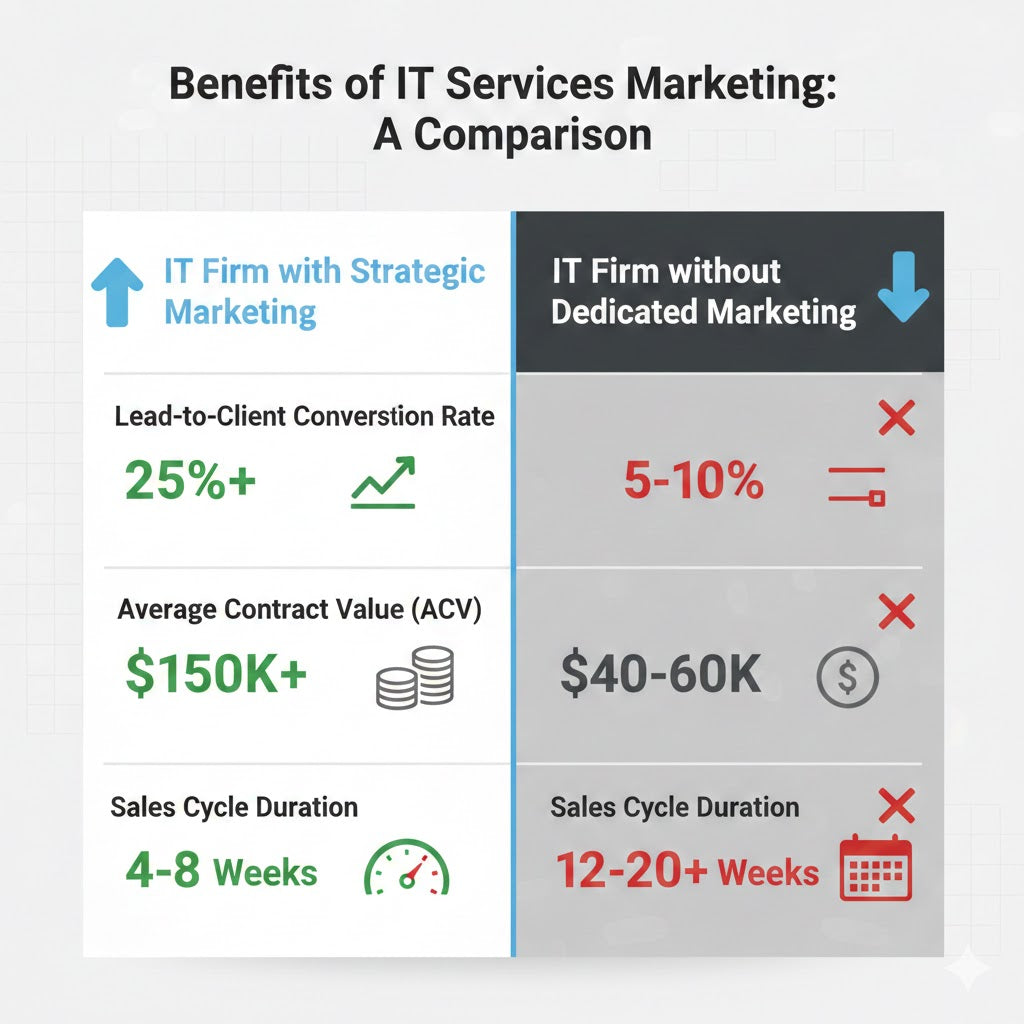
Benefits of IT Services Marketing
In an industry where the product is often invisible—code, cloud space, or "peace of mind" security—marketing serves as the bridge between technical capability and business value. Effective marketing does more than just generate leads; it builds the infrastructure for long-term scalability.
-
Shortening the Sales Cycle: B2B IT decisions often involve 6–10 stakeholders. Strategic content addresses the concerns of each (from the CTO’s technical requirements to the CFO’s ROI concerns) before the first sales call.
-
Building Brand Equity and Trust: In IT, trust is the primary currency. Marketing showcases your expertise through social proof and thought leadership, reducing the perceived risk for the buyer.
-
Improving Lead Quality: By targeting specific Intent-Driven keywords and Ideal Customer Profiles (ICPs), you stop wasting ad spend on "tire kickers" and start attracting high-value accounts ready for a technical discovery.
-
Commanding Premium Pricing: Strong positioning differentiates you from "commodity" IT shops, allowing you to charge based on specialized value rather than hourly rates.
Strategies for IT Services Marketing
Successfully marketing IT services in 2026 requires a funnel-based approach that respects the buyer's journey. From SMEs looking for cost control to enterprises seeking global scalability, your strategy must be precise, data-driven, and multi-channel.
1. Define Your Target Audience and IT Service Positioning
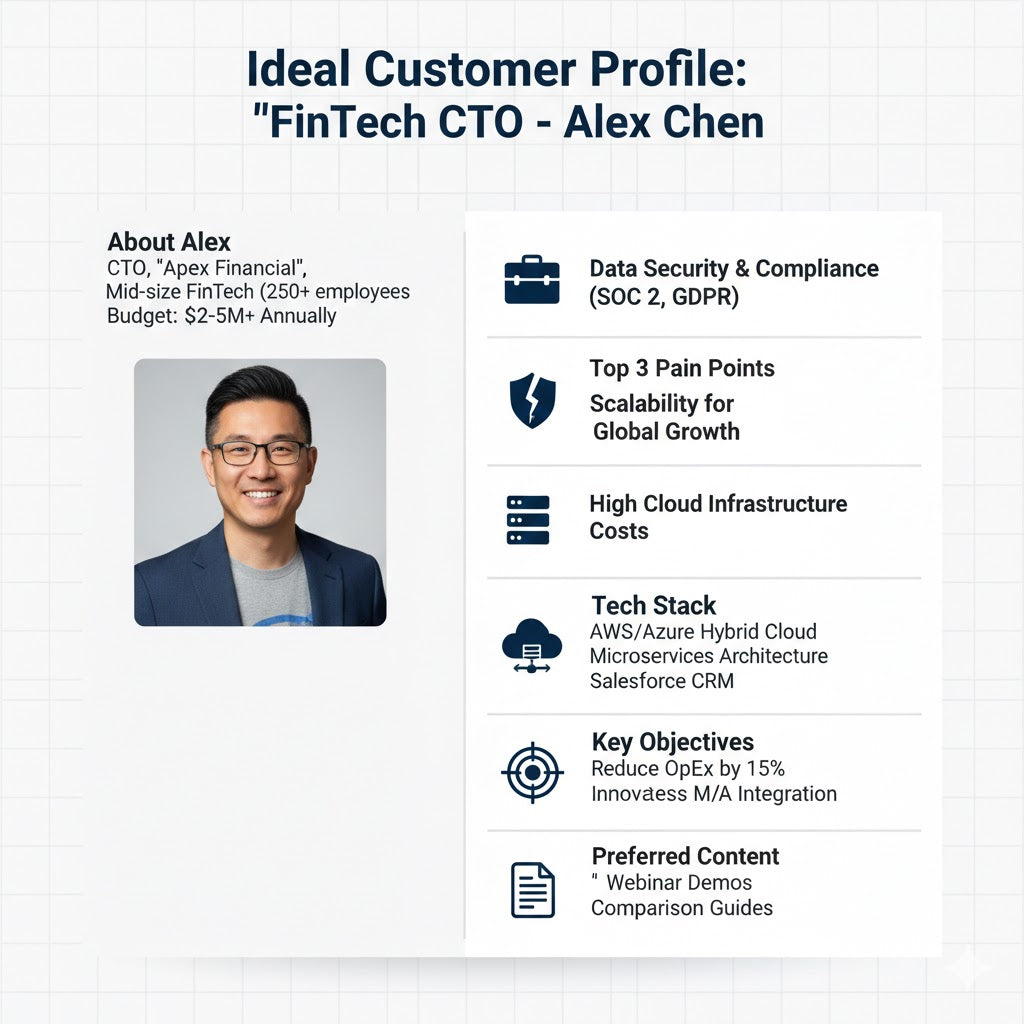
Before spending a dollar on ads, you must define your Ideal Customer Profile (ICP). In the IT world, "everyone" is not a target. Are you serving HIPAA-compliant healthcare providers or high-growth FinTech startups?
-
Identify Pain Points: Don't just sell "Cloud Migration." Sell "Zero-Downtime Scalability" or "Predictable Monthly Tech Spend."
-
Refine the Tech Stack: Align your marketing with the specific technologies you support (e.g., Azure-native environments or specialized cybersecurity frameworks).
-
Tiered Positioning: Clearly distinguish between managed services (long-term stability) and project-based consulting (immediate transformation).
2. Build a High-Authority SEO Strategy for IT Services
Search engine optimization for IT is no longer about keyword stuffing; it’s about Topic Authority. You need to dominate search results for high-intent commercial terms.
-
Commercial Keywords: Target phrases like "managed IT services for [Industry]" or "cybersecurity audit for mid-market enterprises."
-
Solution-Based Content: Create pages that solve specific technical hurdles (e.g., "How to migrate legacy SQL databases to AWS").
-
Technical & Local SEO: Ensure your site speed and schema markup are flawless. For MSPs, Local SEO is vital to winning the "near me" searches that drive regional contracts.
3. Develop Educational Content Marketing That Builds Trust
IT buyers are skeptics. They don't want marketing fluff; they want documentation and proof.
-
Whitepapers & Comparison Guides: Help them choose between Private vs. Public Cloud or EDR vs. MDR security.
-
Deep-Dive Blog Posts: Write for the "technical influencer"—the person who will vet your solution before the CEO signs the check.
-
Use-Case Content: Show exactly how your service solves a specific business problem, backed by data.
4. Implement Inbound Marketing to Generate Qualified Leads
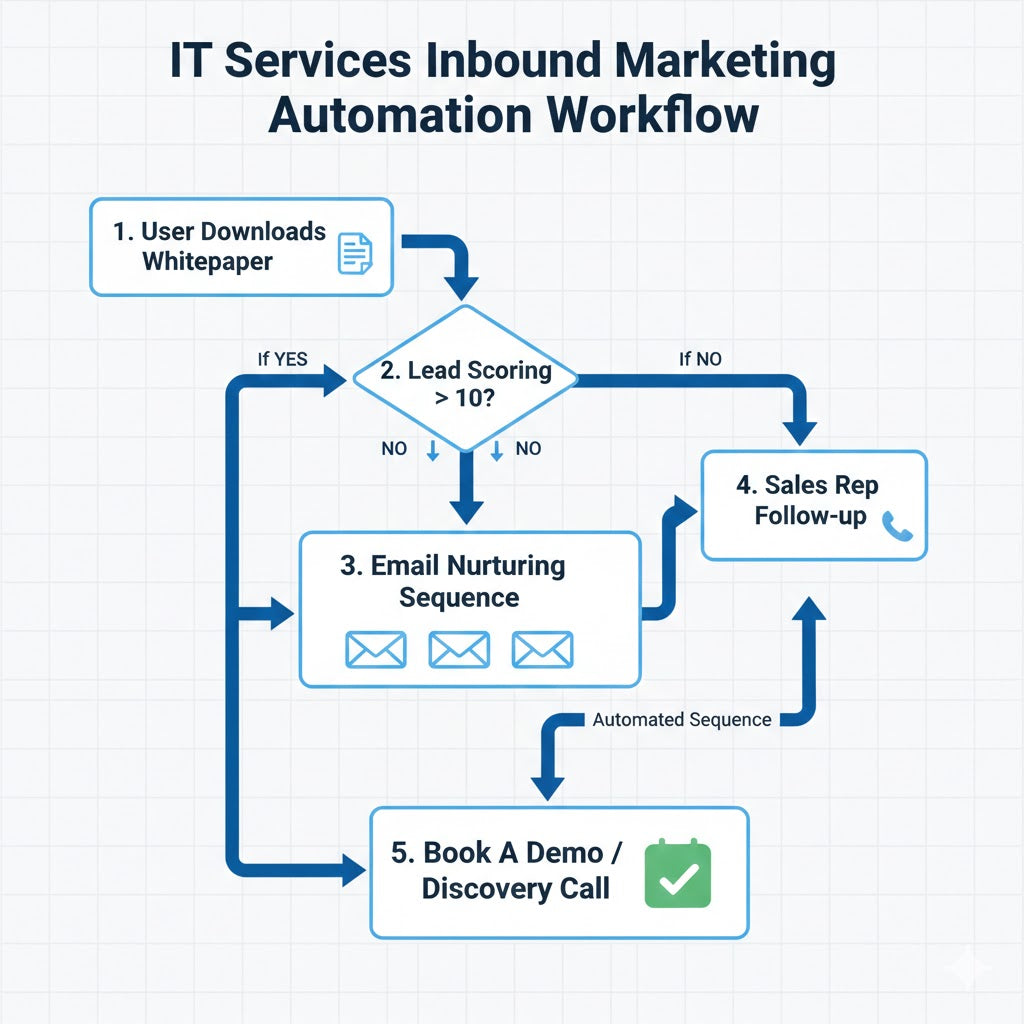
Inbound marketing is the process of turning anonymous visitors into Marketing Qualified Leads (MQLs) through value exchange.
-
Lead Magnets: Offer high-value assets like "The 2026 Cybersecurity Checklist for CFOs" or "Cloud Cost Optimization Templates."
-
Marketing Automation: Use automated workflows to nurture leads based on what they downloaded. If they downloaded a backup guide, send them a case study on disaster recovery.
5. Use LinkedIn and B2B Social Media to Build Authority
For IT services, LinkedIn is a credibility engine. It’s where your founders and lead engineers should be seen as thought leaders.
-
Thought Leadership: Post insights on industry trends, such as the impact of quantum computing on encryption or AI’s role in DevOps.
-
Employee Advocacy: Encourage your engineers to share technical wins. Authentic content from a developer often carries more weight than a corporate post.
6. Invest in Email Marketing for Lead Nurturing
Email is not dead; it is simply more personal. In IT marketing, segmentation is the key to avoiding the spam folder.
-
Lifecycle Segmenting: Send different content to a "cold lead" versus a "past client" looking for an upsell.
-
Industry-Specific Newsletters: If you serve the manufacturing sector, send them updates on IoT security and Industry 4.0, not generic IT tips.
7. Leverage Paid Advertising for Faster Pipeline Growth
While SEO is a long game, PPC (Pay-Per-Click) provides immediate visibility.
-
Google Search Ads: Bid on "high-intent" keywords where users are actively looking for a provider.
-
LinkedIn Account-Based Marketing (ABM): Target specific companies (e.g., Fortune 500 banks) with tailored ads shown only to their IT decision-makers.
-
Retargeting: Stay top-of-mind for users who visited your "Pricing" or "Services" pages but didn't convert.
8. Showcase Case Studies, Testimonials, and Social Proof
In the B2B tech world, your past performance is the best predictor of your future success.
-
Metric-Driven Results: "We improved their uptime" is weak. "We achieved 99.99% uptime and reduced latency by 40% for a global logistics firm" is a winner.
-
Video Testimonials: Seeing a peer talk about how you saved their data during a breach is the ultimate trust builder.
9. Host Webinars, Live Demos, and Technical Workshops
Live interaction bridges the gap between a digital ad and a signed contract.
-
Technical Workshops: Host a session on "Configuring Zero Trust Architecture" to prove your team’s technical depth.
-
Interactive Demos: For SaaS or customized software services, let the prospect see the interface and ask real-time questions.
10. Build Strategic Partnerships and Referral Networks
IT services often exist within an ecosystem. Partnering with non-competing firms can create a massive referral engine.
-
Vendor Partnerships: Being a Gold-tier partner for major cloud or hardware providers often comes with co-marketing funds (MDF) and lead sharing.
-
Consulting Firms: Align with business consultants who don't do implementation; you become their "recommended" tech partner.
11. Leverage AI and Marketing Automation for Efficiency
By 2026, AI is no longer optional in marketing operations.
-
Predictive Analytics: Use tools to identify which leads are most likely to close based on their behavior patterns.
-
Automated Lead Scoring: Assign points to leads who visit your "Security Services" page multiple times, signaling high intent for a sales follow-up.
12. Utilize Data Analytics to Optimize Campaign Performance
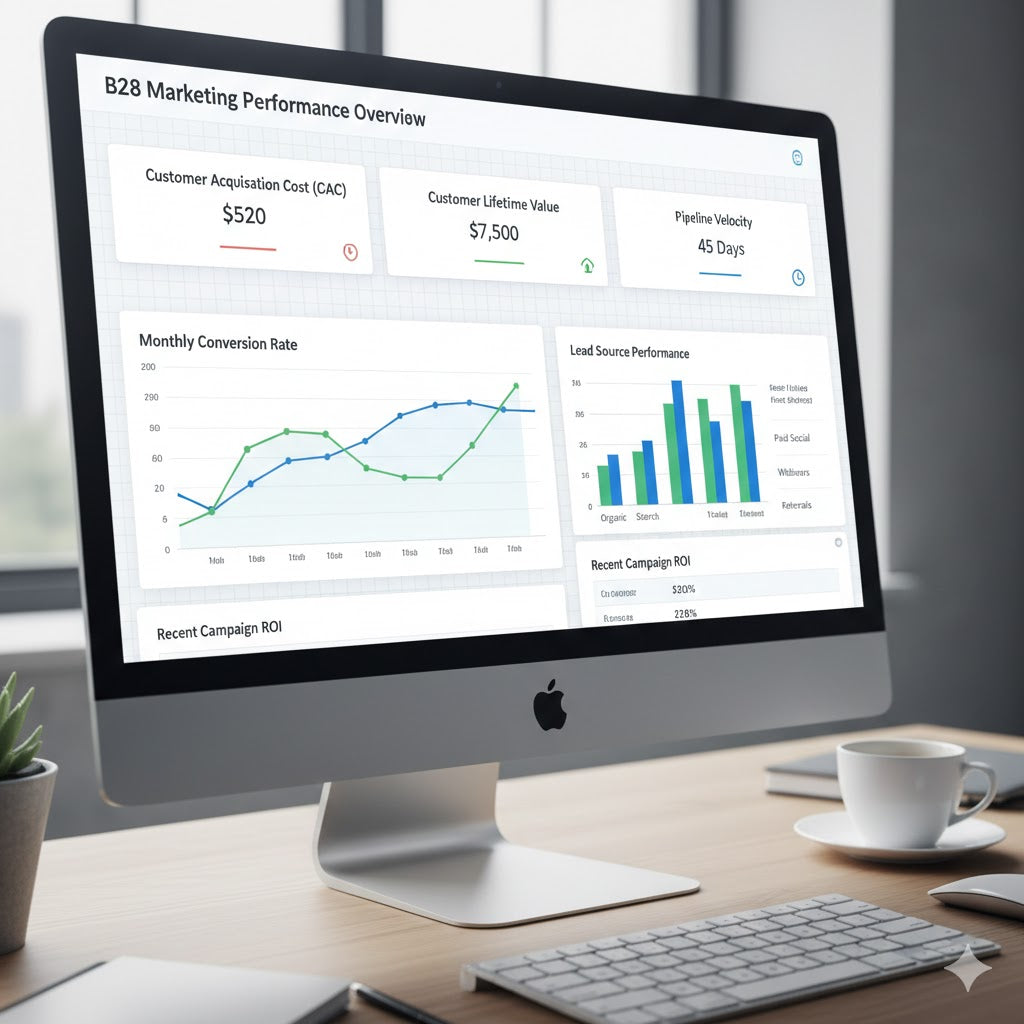
If you can't measure it, you can't improve it. Move beyond "vanity metrics" (likes and shares) to "revenue metrics."
-
Customer Acquisition Cost (CAC) vs. LTV: Ensure the cost to acquire a client doesn't exceed their lifetime value.
-
Pipeline Velocity: Track how long it takes for a lead to move from "Awareness" to "Closed-Won."
13. Integrate Omnichannel Marketing for Consistent Buyer Experience
Your message must be consistent whether the buyer finds you on Google, sees your ad on LinkedIn, or receives your email.
-
Unified Messaging: Ensure your value proposition (e.g., "The Security-First MSP") is the same across all touchpoints.
-
Cross-Platform Remarketing: If a lead reads a blog post on your site, show them a relevant case study on their social feed the next day.
14. Participate in Industry Events and Offline Networking
Despite the digital nature of IT, high-value contracts are still built on handshakes.
-
Trade Shows: Focus on niche industry events (e.g., Legal-Tech or Med-Tech) where your specific expertise is in high demand.
-
Speaking Engagements: Position your experts as speakers at conferences to build instant authority.
15. Emphasize Corporate Social Responsibility (CSR) and Sustainability
Modern enterprises—especially those following ESG (Environmental, Social, and Governance) goals—prefer partners who value sustainability.
-
Green IT: Promote your efforts in data center energy efficiency or hardware recycling programs.
-
Compliance & Ethics: Highlight your commitment to data privacy (GDPR, SOC2) as a core part of your brand identity.
FAQs
What are the best marketing strategies for tech companies?
The most effective strategy is a Hybrid Inbound-ABM approach. This involves using SEO and content marketing to build a broad funnel (Inbound) while simultaneously using targeted LinkedIn ads and direct outreach to pursue high-value "dream" accounts (Account-Based Marketing).
How is tech marketing different from traditional marketing?
Tech marketing is significantly more complex because it involves a High-Involvement Purchase. Unlike consumer goods, IT services have high switching costs and long-term impacts on business operations. Marketing must focus more on education, risk mitigation, and technical validation than on emotional appeals.
Why should technology companies invest in marketing?
Without marketing, a tech company relies solely on referrals and outbound sales. This is not scalable. Marketing creates a Predictable Pipeline, builds brand equity that allows for higher margins, and ensures the company is "pre-sold" before the sales team even picks up the phone.
What role does B2B marketing play in a strategy for tech companies?
B2B marketing acts as the Educational Layer of the sales process. It manages the reputation of the firm across the long decision-making journey, ensuring that when a company is ready to buy, your brand is already on their "shortlist" of trusted providers.
How can a tech company use a content marketing strategy effectively?
Effectiveness comes from Mapping Content to the Funnel. Use "How-to" articles for awareness, "Comparison Whitepapers" for consideration, and "Detailed Case Studies" for the decision stage. The goal is to answer the buyer's questions before they have to ask them.
What are the essential marketing tactics for technology companies?
The "Non-Negotiables" include:
-
A high-converting, mobile-responsive website.
-
Search Engine Optimization (SEO) for technical/commercial intent.
-
LinkedIn thought leadership for key executives.
-
A robust CRM and automation system to manage the long sales cycle.
Further reading