
The iGaming landscape in 2026 is a far cry from the "Wild West" era of a decade ago. For performance marketers and media buyers, the challenge has shifted from simply bypassing ad filters to navigating a complex web of global regulations, skyrocketing Customer Acquisition Costs (CAC), and a hyper-competitive race for player attention.
Success no longer hinges solely on who can burn the most budget on Facebook or Google. Instead, it belongs to those who can synchronize high-intent traffic with sophisticated retention funnels. This guide dives deep into advanced iGaming marketing strategies, moving beyond the basics to explore how professional operators scale sustainably in regulated environments.
How iGaming Marketing Has Evolved in Regulated Markets
The modern iGaming marketing landscape looks very different from what it was even a few years ago. Understanding this evolution is essential before discussing tactics, because many strategies that once worked aggressively are now either inefficient or non-compliant.
The Shift from Aggressive Acquisition to Sustainable Growth
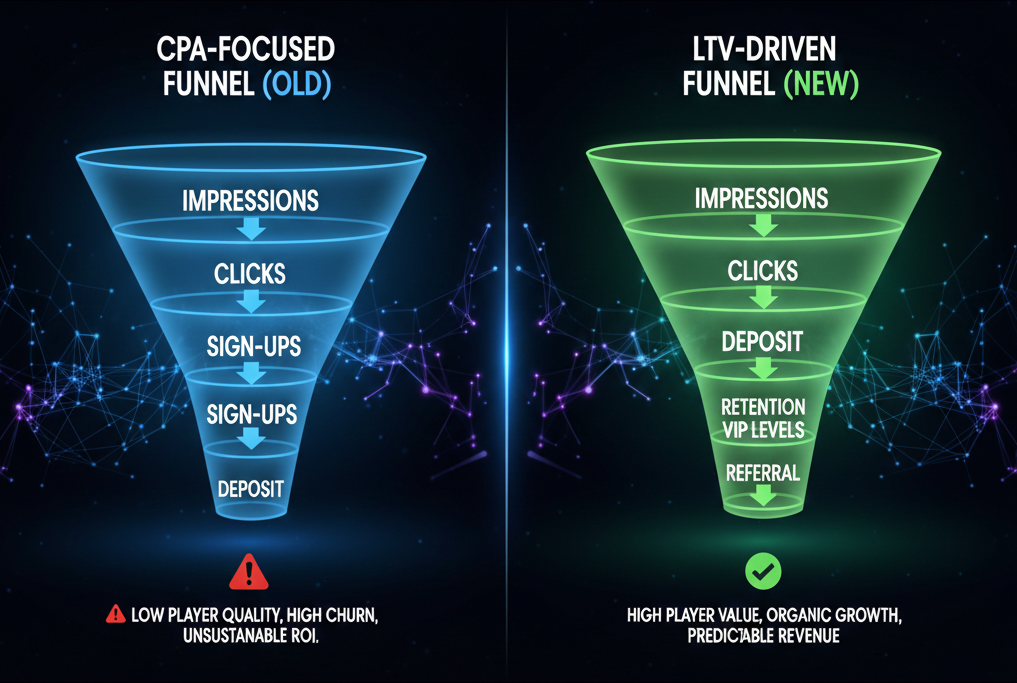
In early-stage or loosely regulated markets, iGaming growth was often driven by volume-first acquisition. High-risk creatives, broad targeting, and aggressive bonus messaging were common. While this approach delivered short-term sign-ups, it frequently resulted in low player quality, high churn, and long-term compliance risks.
Today, regulated markets reward sustainable acquisition models. Operators must focus on attracting players who are likely to deposit, remain active, and generate long-term value. This shift has made LTV-driven marketing far more important than raw CPA performance.
How Regulation Reshaped Media Buying and Messaging
Advertising policies in the US and UK have forced marketers to rethink how traffic is generated. Direct promotion of gambling offers is often restricted or heavily scrutinized on major platforms. As a result, media buying now emphasizes:
-
Educational or informational angles instead of direct offers
-
Pre-lander content that establishes trust and context
-
Clear responsible gaming messaging
-
Strong alignment with platform-specific policies
This regulatory pressure has indirectly raised the quality bar for iGaming marketing. Winning strategies are now more nuanced, data-driven, and brand-conscious.
Core iGaming Marketing Strategies for Facebook Ads
To compete at a high level, your strategy must be multi-layered. You cannot rely on a single channel. The following strategies represent the current industry standard for high-growth operators, focusing on a mix of technical execution and psychological triggers.
1. Advanced SEO and Content Dominance
SEO remains the bedrock of iGaming because it captures "high-intent" users—people actively looking for a place to play.
-
The Topical Authority Approach: Instead of just targeting "best online casino," top players build vast content hubs covering game guides, betting strategies, and payment method reviews. This builds a "moat" of organic traffic that is resistant to ad platform policy changes.
-
Localized SEO: For global operators, localizing content isn't just about translation. It’s about understanding regional nuances (e.g., "slots" in the US vs. "fruities" or "pokies" elsewhere) and complying with local advertising disclosure laws.
2. Programmatic Advertising and Native Networks
When Tier 1 social platforms become too restrictive or expensive, programmatic and native ads offer a scalable alternative.
-
Contextual Targeting: Using native ad platforms allows you to place ads on high-traffic sports news sites or lifestyle blogs where the audience is already in a "leisure" mindset.
-
Dynamic Creative Optimization (DCO): Professional media buyers use DCO to swap out headlines and images in real-time based on what is performing best for a specific sub-segment of traffic.
3. Social Media and Influencer "Shadow" Marketing
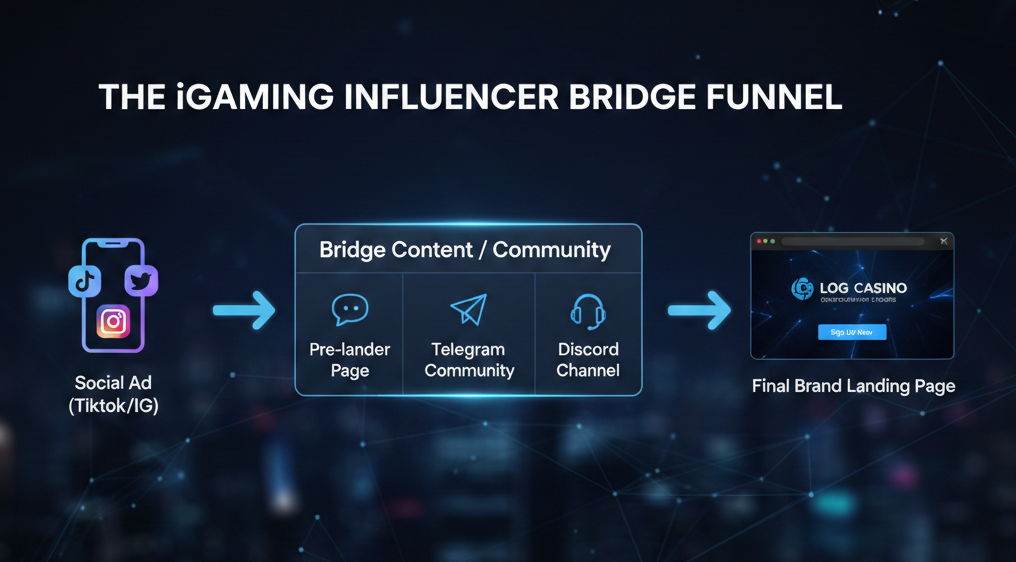
Directly linking to a casino from a TikTok or Instagram ad is a quick way to get banned. High-level marketers use a "bridge" strategy.
-
The Influencer Funnel: Influencers don't sell the casino; they sell the experience or provide educational content (e.g., "How to read odds"). They drive traffic to a landing page or a Telegram community, which then funnels users to the platform.
-
Community Building: Leveraging Discord or Telegram allows for direct communication with players, bypassing the algorithms of major social networks.
Building a private community is only half the battle; knowing how to spark engagement without triggering platform filters is the other. Check out our specialized Facebook Group Marketing Tips to master the art of organic player retention.
4. Data-Driven Retention and CRM
Marketing doesn't end at the deposit. In fact, that's where the most technical marketing begins.
-
Predictive Modeling: Using AI to identify "at-risk" players before they churn. If a high-value player hasn't logged in for 3 days, an automated, personalized bonus can be triggered.
-
Gamified Loyalty Programs: Moving beyond simple "cashback" to tiered systems that use psychological progression hooks to keep players engaged.
While AI identifies at-risk players, you need a high-speed delivery mechanism to re-engage them. Integrating Facebook Messenger Chatbot Marketing into your CRM allows for instant, personalized bonus delivery that significantly cuts down churn.
iGaming Marketing Examples: Real-World Strategy Breakdowns
Theory is useful, but seeing how these elements fit together in a live funnel is where the real insights lie. Here are three examples of how professional teams scale different types of iGaming products.
Example 1: Scaling a Casino Brand with Native Ads
Native advertising is often the "secret sauce" for brands that find Facebook too volatile.
-
Traffic Source & Intent: The team targets mid-tier news publishers and sports blogs using platforms like Taboola or Outbrain. The intent is "passive discovery"—the user is reading news and is open to entertainment.
-
Funnel Structure:
-
The Ad: A curiosity-gap headline (e.g., "The New Way Players are Approaching Digital Slots in 2026").
-
The Pre-Lander: An "advertorial" style page. It doesn't look like an ad; it looks like a review or a news article comparing different platforms. This builds trust and pre-sells the user on the brand's unique features (e.g., instant withdrawals).
-
The Offer: A clear, time-sensitive welcome bonus on the final landing page.
-
Compliance Positioning: By using an informational pre-lander, the brand avoids "hard-selling," which makes the funnel much more compliant with ad network policies.
Example 2: Sportsbook Growth via Influencer + Retargeting Funnel
Sports betting is highly seasonal and event-driven. A successful strategy leverages the "hype" of major tournaments.
-
Role of Influencers: Rather than generic celebrities, the brand partners with "micro-influencers" who are known for their sports analysis. These influencers share "expert picks" on Twitter (X) and Instagram.
-
Retargeting Mechanics: Users who click the influencer's link but don't deposit are tagged. They are then retargeted across the web with "odds boosts" specifically for the match they were interested in.
-
Conversion Optimization: The deposit stage is streamlined with "One-Click Deposit" options (Apple Pay/Google Pay) to reduce friction during the high-stress period just before a game starts.
To further humanize the brand during high-stakes matches, many operators are now utilizing Facebook marketing live sessions to host interactive 'watch-along' events and live odds analysis.
Example 3: Affiliate-Led Growth Using SEO + Paid Traffic
Many of the largest players in the space are actually super-affiliates who combine organic and paid strategies.
-
The Strategy: The affiliate builds a high-authority review site (SEO). They then use paid search (PPC) to bid on "brand + review" keywords of competitors.
-
Risk Mitigation: By controlling the review site, they can swap out which casino they promote based on which one is offering the best conversion rates and player retention at that moment. This diversifies their risk; if one casino shuts down, the traffic is simply redirected.
-
LTV Outcomes: Because the traffic is coming from a "review" context, the players are highly educated and have a much higher LTV than "accidental" clickers from social media.
Common Mistakes When Implementing iGaming Facebook Ads Strategies
Facebook Ads can support iGaming growth, but only when used with the right strategic role. Most failures come from misaligned expectations, weak funnel design, or ignoring platform and regulatory realities.
Treating Facebook as a Direct Deposit Acquisition Channel
Facebook is not a high-intent channel for iGaming. Users are rarely ready to register and deposit immediately. Pushing direct conversions too early increases CPM, lowers traffic quality, and destabilizes delivery. Facebook performs best as a demand-creation and warming channel within a larger funnel.
Using Overly Promotional or Bonus-Driven Creatives
Bonus-heavy and aggressive payout messaging often leads to disapprovals and low-quality users. These creatives attract incentive hunters rather than long-term players. Effective Facebook ads focus on experience, education, and platform value instead of short-term promotional hooks.
Skipping the Pre-Lander and Sending Traffic Directly to Registration
Direct-to-registration flows rarely work for Facebook iGaming traffic. Users need context, trust signals, and clarity before committing. Pre-landers reduce friction, explain how the platform works, and improve both compliance and conversion quality.
Optimizing for the Wrong Conversion Events
Optimizing for page views or basic registrations misleads the algorithm. These events do not reflect player value. Stronger strategies optimize for high-intent engagement and rely on retargeting and cohort analysis to identify users who are likely to deposit and retain.
High-value players often share demographic traits with other premium audience segments. For example, learning how to target homeowners on Facebook Ads can provide sophisticated insights into reaching users with higher disposable income and stable financial profiles.
Underestimating Compliance and Responsible Gaming Signals
Weak compliance signals increase rejection risk and reduce trust. Facebook expects clear age restrictions, responsible gaming language, and transparent messaging. Sustainable campaigns integrate compliance naturally throughout creatives and landing experiences.
Failing to Rotate Creatives in a High-Fatigue Environment
Creative fatigue happens quickly in iGaming due to audience overlap and policy-limited messaging. Running the same creatives too long increases CPM and lowers CTR. Consistent creative rotation and angle testing are essential for stable performance.
Running Facebook Ads in Isolation From the Full Funnel
Facebook Ads should not operate alone. They work best when aligned with SEO, content, retargeting, and CRM efforts. Without funnel integration, performance plateaus and long-term scalability become difficult.
FAQs
What is the most effective channel for iGaming in 2026?
There is no single "best" channel, but a combination of SEO for long-term stability and Programmatic/Native for rapid scaling is currently the most balanced approach for high-level operators.
How do I lower my CPA in a competitive market?
Focus on the "Middle of the Funnel" (MOFU). Instead of competing for the most expensive keywords, target users who are looking for comparisons, "how-to" guides, or specific payment methods (e.g., "Fastest withdrawal casinos").
Can I run iGaming ads on Facebook and Google?
Yes, but you must be a licensed operator and go through their specific certification process. For affiliates or those in grey markets, "cloaking" is often used, but it carries high risks of permanent bans and is not recommended for long-term brand building.
Why is LTV more important than CPA?
In a regulated market, CPAs can often exceed $300-$500. If a player only deposits $50 and leaves, you lose money. You must optimize for LTV (Lifetime Value) to ensure that the revenue generated over 6-12 months covers the high cost of acquisition.