
In the current global economy, logistics is no longer just a “back-office” function; it is a frontline competitive advantage. However, for marketing professionals and ad specialists, the challenge is steep. We are operating in a landscape where freight rates are volatile, port congestion is a constant threat, and the B2B buying committee is more digitally savvy than ever.
Traditional marketing—relying on cold calls and outdated brochures—is dead. To capture high-value shippers in the US and UK markets, you need a strategy that mirrors the complexity of the supply chain itself: data-driven, technically transparent, and hyper-targeted. This guide moves beyond the basics of “brand awareness” to provide a performance-marketing blueprint for 3PLs, freight forwarders, and asset-based carriers looking to dominate the SERPs and maximize ROI.
Why Logistics Marketing Is Fundamentally Different from Other B2B Industries
Before deploying a single dollar into Google Ads or LinkedIn campaigns, a specialist must understand that logistics does not behave like SaaS or retail. The friction points are unique, and the stakes involve physical assets and global trade compliance.
Long Sales Cycle (3–9 Months Typical)
Unlike B2B software where a trial can lead to a conversion in weeks, logistics contracts often involve Request for Proposals (RFPs) and extensive vetting. Your marketing must nurture leads through a “marathon” rather than a “sprint,” using retargeting to stay top-of-mind during long deliberation periods.
Multiple Stakeholders (Procurement, Operations, Finance)
A single shipping lead usually involves three distinct personas. Procurement cares about cost; Operations cares about reliability and API integrations; Finance cares about credit terms and billing accuracy. Your content strategy must address all three to clear the “buying committee” hurdle.
High Switching Cost
Changing a 3PL or a primary carrier is an operational nightmare. Shippers fear the “implementation gap.” Therefore, marketing must focus heavily on de-risking the transition through case studies and implementation roadmaps.
Margin Pressure & Commoditization
When every provider claims to offer “on-time delivery at the best price,” you are a commodity. Differentiation in 2026 comes from your data visibility and consultative expertise, not your truck count.
Regional vs. Global Positioning (US vs. UK Market Nuances)
While the US market focuses heavily on domestic trucking capacity and USMCA (United States-Mexico-Canada Agreement) compliance, the UK market is currently hyper-focused on post-Brexit customs complexity and European short-sea shipping. Tailoring your ad copy to these specific regional “pain points” is the difference between a click and a conversion.
Benefits of Effective Marketing Strategies in Logistics
Investing in a sophisticated marketing engine does more than just fill the pipeline. It creates a “moat” around your business that protects your margins even when the freight market softens.
-
Shortened Sales Cycles: By educating the lead before the first sales call, you eliminate basic objections early.
-
Improved Lead Quality: High-intent SEO and filtered PPC ensure your sales team isn’t wasting time on “one-time small parcel” inquiries.
-
Brand Premium: Strong thought leadership allows you to charge more than the “cheap” competitor because shippers trust your resilience.
-
Operational Alignment: Data-driven marketing allows you to turn off ads for lanes where you lack capacity, ensuring you only hunt for the freight you can actually move.
Core Logistics Marketing Strategies for 2026
The following ten strategies represent a holistic approach to B2B logistics growth. By treating your marketing like a high-precision supply chain, you can move leads from “stranger” to “contracted partner” with surgical efficiency.
Building Brand Authority through “Technical Transparency”
In 2026, shippers view “visibility” as a product, not a feature. If your website doesn’t scream “Tech-Enabled,” you are losing to digital-native disruptors.
-
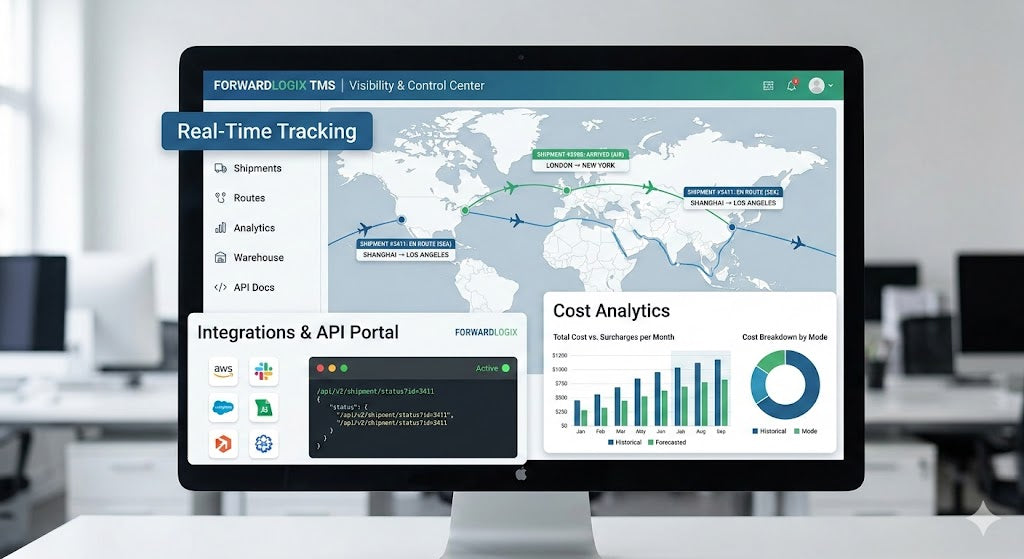
Market your Tech Stack: Don’t just mention you have a TMS (Transportation Management System). Create a dedicated page showcasing your dashboard, real-time tracking interface, and reporting capabilities.
-
Developer-Friendly Documentation: For enterprise clients, the “Operations” stakeholder will ask about API integrations. Providing public-facing API documentation or “Integration Guides” builds instant technical credibility.

Niche-Specific SEO & Semantic Topic Clusters
Broad keywords like “freight forwarding” are too expensive and too vague. The money is in the “Long-Tail” of specific industry pain points.
-
Vertical-Specific Content: Build clusters around “Cold Chain Compliance for US Pharma” or “EV Battery Logistics Regulations.” This attracts high-margin shippers with specific needs.
-
Authority Hubs: Create deep-dive resources on Incoterms 2020, the impact of USMCA on automotive parts, or UK Global Tariffs. Google rewards sites that demonstrate “E-E-A-T” (Experience, Expertise, Authoritativeness, and Trustworthiness) in highly regulated niches.
Precision PPC & Negative Keyword Mastery
For an Ads specialist, logistics is a minefield of “junk” traffic. You must be aggressive with your exclusion lists.
-
Negative Keyword Lists: Strictly exclude terms like “jobs,” “careers,” “tracking my package,” “Amazon return,” and “personal shipping.” You are looking for commercial shippers, not individuals.
-
B2B Modifiers: Use high-intent phrases like “FCL quote,” “contract logistics provider,” “Project cargo specialist,” and “bonded warehouse rates.”
LinkedIn Account-Based Marketing (ABM)
LinkedIn is the “trade show that never sleeps.” For logistics, it is the primary channel for reaching COOs and Supply Chain Directors.
-
Whale Hunting: Use LinkedIn Matched Audiences to upload a list of your “Top 100 Target Companies.” Run ads specifically for those employees, highlighting how you solved a problem for a similar company in their industry.
-
Retargeting with Social Proof: Use LinkedIn Insight Tag to retarget people who visited your “Pricing” page with a 30-second video testimonial from a satisfied client.
Conversion Rate Optimization (CRO) for Freight Landing Pages
Most logistics websites are “leaky buckets.” They drive traffic to a generic “Contact Us” page that asks for too much or too little.
-
Interactive Tools: Replace the static form with a “Freight Quote Calculator” or a “Logistics Health Check” tool. This provides immediate value and captures lead data more effectively.
-
Lead Scoring: Use multi-step forms. Ask for “Annual Shipping Volume” or “Industry” in the second step. This allows your sales team to prioritize high-volume leads while automating a “not yet ready” sequence for smaller ones.

Thought Leadership via Employee Advocacy
People buy from people, especially when millions of dollars in inventory are at stake.
-
The “Human” Side of Logistics: Encourage your subject matter experts (Customs Brokers, Warehouse Managers) to post on LinkedIn. A post about “How to avoid detention and demurrage at the Port of Savannah” generates more trust than any corporate ad.
-
Behind-the-Dock Content: High-quality, raw video of cargo loading or warehouse safety protocols proves that you have the assets and the expertise you claim to have.
High-Value Lead Magnets (Data-as-a-Hook)
In exchange for an email address, give the shipper something they can actually use in their next board meeting.
-
Predictive Tools: “2026 Peak Season Surcharge Predictor” or “Post-Brexit Trade Lane Analysis.”
-
Compliance Checklists: A “Customs Audit Readiness Checklist” is a low-cost, high-value asset that positions you as a consultant rather than a vendor.
Marketing Automation & Lead Nurturing
Since the sales cycle is long, you must stay in the “inbox” without being annoying.
-
Vertical Nurturing: If a lead downloads a whitepaper on “Retail Logistics,” do not send them info on “Oil & Gas.” Segment your automation so they only receive market updates relevant to their cargo.
-
Abandoned Quote Sequences: If someone uses your quote calculator but doesn’t book, trigger an automated email 2 hours later offering a “15-minute consultation with a lane specialist.”
Local SEO for Global Logistics Hubs
Logistics is global, but assets are local. Shippers often search for providers near specific ports or hubs.
-
Geo-Targeted Landing Pages: Optimize for “Bonded warehouse near Port of Long Beach” or “Customs broker near Heathrow Airport.”
-
Google Business Profile (GBP): Ensure every physical warehouse or office is verified and has high-quality photos and reviews. Local SEO is the “Last Mile” of your digital strategy.

Sustainability (ESG) as a Competitive Differentiator
In the US and especially the UK/EU, “Green Logistics” is moving from a “nice-to-have” to a mandatory requirement for large corporate RFPs.
-
Market Your Carbon Data: If your TMS can calculate carbon emissions per shipment, make that a headline in your ads.
-
Certifications: Proudly display ISO 14001 or partnerships with carbon-offset programs. ESG-conscious shippers are often less price-sensitive and more brand-loyal.
Common Logistics Marketing Mistakes That Burn Budget
Avoid these pitfalls to ensure your marketing department remains a profit center, not a cost center.
Competing on Price Only
If your only message is “We are cheaper,” you attract the least loyal customers who will leave you for a 1% discount elsewhere. Marketing should focus on Total Cost of Ownership (TCO); how you save them money through fewer delays, better data, and less manual labor.
Broad Targeting in Ads
Running “Logistics” keywords on Google with a broad match is a fast way to blow $10,000. Use phrase and exact match, and monitor your search term reports daily to prune irrelevant traffic.
Ignoring Sales Enablement
Marketing’s job isn’t done when a lead is generated. You must provide the sales team with “battle cards,” pitch decks, and case studies that match the marketing message. If marketing promises “Tech-Forward,” but sales shows up with a 1998 PowerPoint, the trust is broken.
Not Aligning Marketing with Operations Capacity
There is no point in marketing your “Drayage” services if your fleet is at 100% capacity for the next three months. Marketing and Operations must meet weekly to adjust ad spend based on real-world asset availability.

FAQs
Is SEO or PPC better for logistics?
SEO is a long-term asset that builds authority, while PPC is a faucet you can turn on for immediate leads. For logistics, a “balanced diet” is best: use PPC for high-intent “Buy” keywords and SEO for “Educational” keywords to build the top of your funnel.
How do we market if we don’t own our trucks (Non-Asset Based)?
Focus your marketing on your Network and your Technology. Your value isn’t the truck; it’s your ability to find capacity when others can’t and the data visibility you provide to the shipper.
Which social media platform is best for 3PLs?
LinkedIn is undisputed for B2B. However, YouTube is increasingly important for “Explainer” videos and showing warehouse operations. Meta (Facebook/Instagram) can be effective for retargeting decision-makers who have already visited your site.
How long does it take to see ROI in logistics marketing?
Because sales cycles can range from 3–9 months, ROI measurement should consider multi-touch attribution and long nurturing sequences.
Read more:


